
Planning Guides
Popcorn Ceiling Removal: Check What It Contains, Then Decide
Quick answer
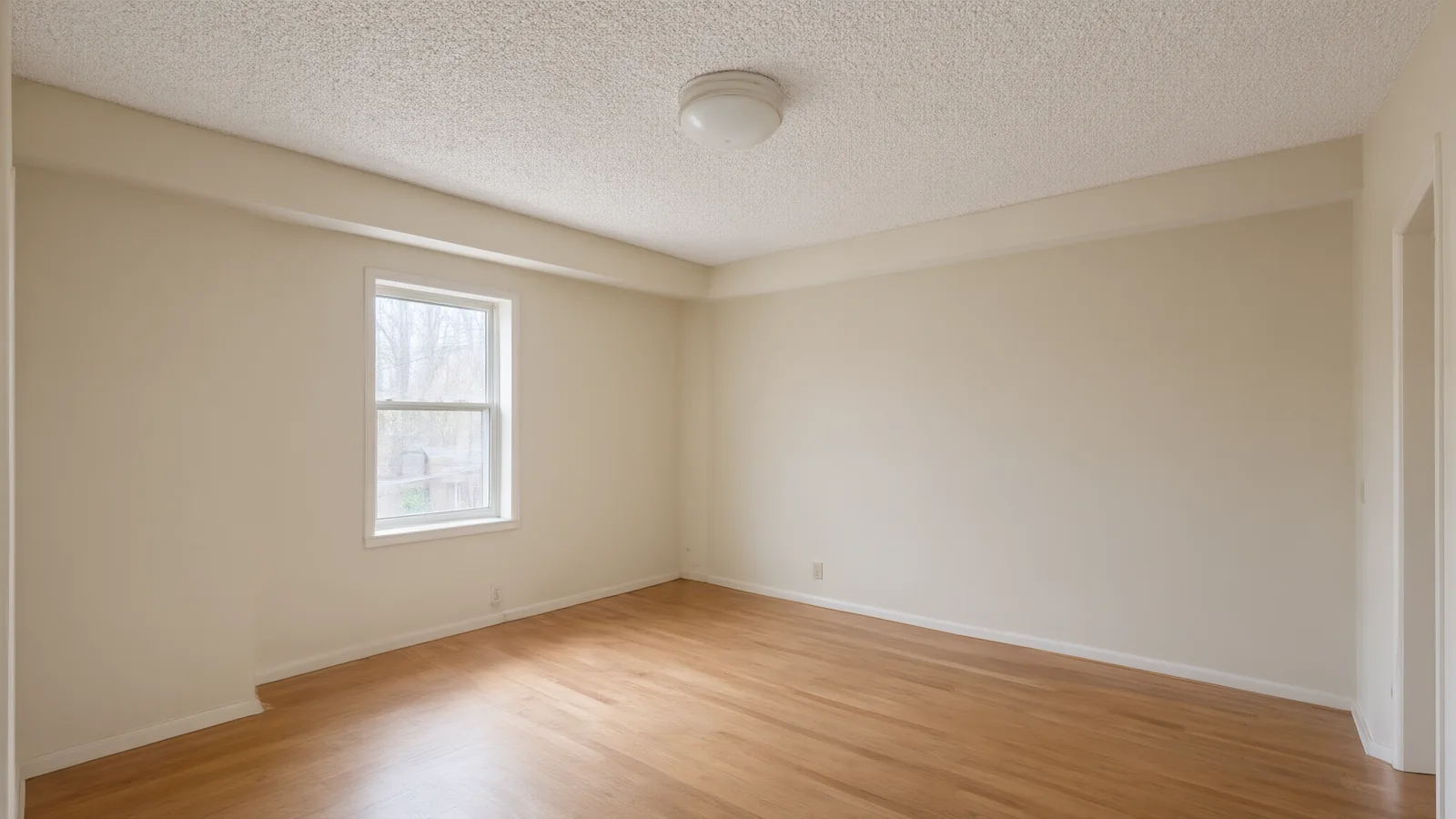
Before any popcorn ceiling removal, find out whether the texture may contain asbestos; EPA says you generally cannot tell by looking. If it is in good condition and you will not disturb it, EPA says to leave it alone. Do not scrape, sand or cut a suspect ceiling. Before remodeling, EPA recommends a professional inspection: ask a trained, accredited asbestos professional to assess the material and the planned work, then decide to leave, cover or remove it.
A popcorn ceiling looks like a quick weekend project until you ask what is in the texture. This guide helps you decide before anyone picks up a scraper. It explains why to check before you disturb the ceiling, what your options are and what to put in writing. If the ceiling also has cracks, stains or sagging, our ceiling repair service covers the repair side of the job.
Do you have to remove a popcorn ceiling?
No. A popcorn ceiling in good condition that you will not disturb can stay where it is. People remove it because it looks dated, makes ceiling repairs harder to hide or is in the way of a remodel. That last reason matters most, because texture gets disturbed when you cut in a new light fixture, fix a stain or take out a wall. If your plans will cut, scrape or sand the ceiling, the question of what the texture may contain comes first.
Why check before you disturb the ceiling?
Because textured ceiling coatings are one of the places EPA lists where asbestos may be found. EPA's overview of asbestos names "textured paint and patching compounds used on walls and ceilings" among the building materials that may contain it. EPA's homeowner guidance adds that you generally cannot tell whether a material contains asbestos simply by looking at it, unless it is labeled, and that if in doubt you should treat it as if it does and leave it alone.
EPA's page does not offer an age cutoff you can use as a shortcut, so do not guess from the year your home was built. The risk comes from disturbing the material. EPA says asbestos-containing material may release fibers when it is disturbed, damaged, removed improperly, repaired, cut, torn, sanded, sawed, drilled or scraped. EPA also notes that exposure increases the risk of lung disease, and that symptoms can take many years to appear.
None of that means a popcorn ceiling is dangerous just by hanging over your head. EPA says material that is in good condition and will not be disturbed is not likely to pose a health risk. Our guide to ceiling water stains also covers checking a textured ceiling before it is cut into.
Who should test a popcorn ceiling?
EPA recommends a trained and accredited asbestos professional, and says taking samples yourself is not recommended. EPA explains that incorrect sampling can be more hazardous than leaving the material alone. It suggests an inspection if you are planning to remodel or if building materials are damaged.
Federal law does not require people who inspect, repair or remove asbestos-containing material in detached single-family homes to be trained and accredited, according to EPA, but some states and localities do. EPA advises homeowners to make sure anyone they hire to handle asbestos is trained and accredited, and points to state agencies for current lists. EPA keeps a state-by-state list of asbestos contacts that includes Pennsylvania.
A few practical points that follow from that guidance:
- Do not scrape, sand or cut the ceiling to "see what is in there." That is the disturbance the guidance warns about.
- Get the result in writing before you plan the work.
- Use separate firms for testing and removal if you can. EPA says it is better to avoid a conflict of interest.
What are your options for popcorn ceiling removal?
You have four realistic choices: leave it, cover it, smooth over it or remove it. Which one fits depends on the test result, the ceiling's condition and what else you are doing to the room. Smoothing over is covered in its own section below.
Leave it and repair around it
If the texture is in good condition and nothing is going to disturb it, leaving it is a legitimate answer, and it is the one EPA points to for undamaged material that will not be disturbed.
Cover it
EPA describes covering, which it calls enclosure, as placing something over or around the material to prevent fibers from being released. For asbestos-containing material, EPA says repair usually means sealing or covering, and the material stays in place. Our ceiling repair page lists flat ceiling board installation for remodels and rooms where old material has been removed. Whether a new layer is a suitable way to cover your particular ceiling is a question for the accredited professional who assesses it, not something to assume.
Remove it
EPA says removal may be required when remodeling will disturb asbestos-containing material, and that removal is complex and must be done only by a trained and accredited asbestos professional. EPA warns that improper removal may actually increase your family's exposure. If asbestos is present or presumed, a qualified professional must handle any needed work. A negative asbestos result does not rule out other hazards, including lead in paint, so the contractor still has to plan the finishing work with the right professionals; the next section covers why this is not a do-it-yourself step.
Can you scrape a popcorn ceiling yourself?
Do not disturb a suspect ceiling. Ask a trained, accredited asbestos professional to assess the material and the planned work. If asbestos is present or presumed, have an appropriately qualified professional handle any needed work. A negative asbestos result does not rule out other hazards, including lead in paint; ask the appropriate qualified professional about the whole surface and applicable rules before work.
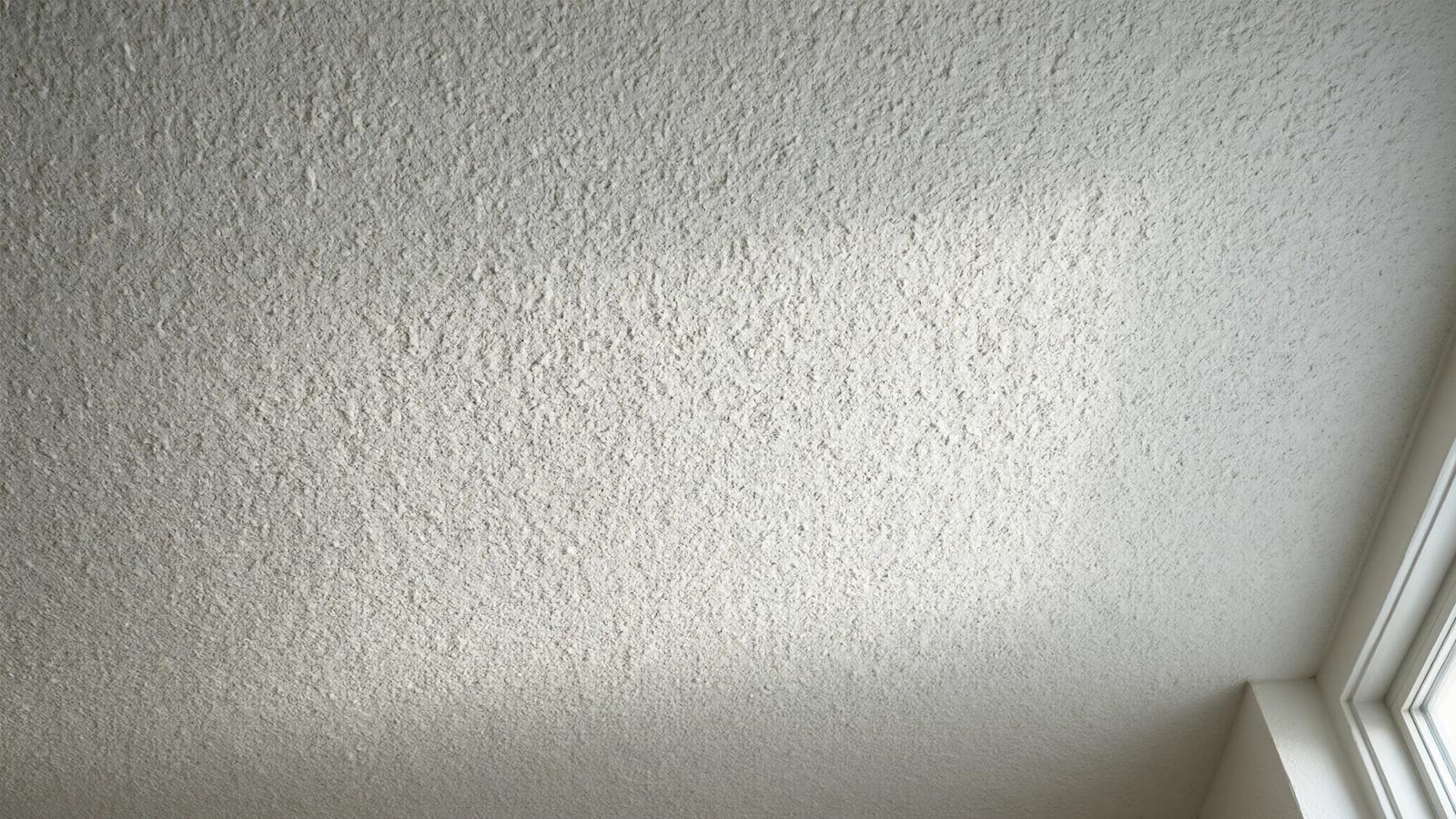
Scraping is one of the steps EPA lists among the ways fibers can be released, so this guide gives no do-it-yourself scraping or sanding steps. Scraping and sanding create dust, and a ceiling can show flaws more than a wall does, because light from windows and fixtures rakes across it. Our guide to matching drywall texture explains why. Ask whoever does any work how they will control dust and protect the room, and get that plan in writing.
Can you smooth over a popcorn ceiling?
Yes, a smooth finish is a common goal, and a skim coat is one way to get it once the ceiling has been assessed. A skim coat is a thin layer of joint compound applied across the whole surface, then sanded and primed. The result depends on the level of finish you ask for. Our drywall finish levels guide explains what each level means and why a smooth ceiling under strong light may need a higher one.
Main Line Drywall's texture matching page says that when matching is not the best option, it can quote skim coating or texture removal so the whole wall or ceiling has a consistent finish. That is a quote for finishing work. The contractor must determine whether the finish and any prep will disturb suspect material before work starts. EPA describes enclosing asbestos-containing material as professional work, not ordinary skim coating, so a skim coat over a suspect ceiling is a question for the accredited professional, not a given.
What should a written scope say about the ceiling?
A good written scope says what happens to the existing texture, who confirmed what it contains and what finish you will get. Without that, two quotes can look alike and describe very different jobs. These are questions to ask any contractor, including us:
- Has the existing texture been assessed or tested, by whom and what did the report say?
- Is the plan to leave, cover, skim or remove the texture?
- Who is responsible for any material that must be handled by an accredited professional?
- How will the room, floors and furniture be protected, and how will dust be controlled?
- What finish level is the ceiling being left at, and is paint included?
- If the ceiling is also cracked, stained or sagging, is that repair part of the same scope?
If your ceiling has a plaster section or an older patch, our guide to plaster repair in Chester County explains how those surfaces differ from drywall.
Frequently asked questions
- Does a popcorn ceiling contain asbestos?
- It may. EPA lists textured paint and patching compounds used on walls and ceilings among the materials that may contain asbestos, and says you generally cannot tell by looking. Laboratory testing through a trained, accredited professional is how to find out, so do not assume either way.
- Do I have to test before popcorn ceiling removal?
- This guide does not describe a universal legal requirement to test. EPA recommends a professional inspection if you are planning to remodel or if building materials are damaged, and says material in good condition that will not be disturbed can be left alone. Rules can differ by state and locality, so ask the professional and your contractor. Do not scrape, sand or cut a suspect ceiling in the meantime, and know that one test result does not settle every layer or every hazard on the surface.
- Can I test the popcorn ceiling myself?
- EPA says taking samples yourself is not recommended, because incorrect sampling can be more hazardous than leaving the material alone. It advises hiring a trained and accredited asbestos professional to take samples for analysis.
- Is it safe to paint over a popcorn ceiling?
- Do not disturb or paint damaged or suspect material; ask a trained, accredited asbestos professional to assess it and recommend an appropriate approach.
- Who can handle asbestos if the test is positive?
- EPA says removal and major repair should be done by people trained and qualified to handle asbestos, and it recommends that homeowners check training and accreditation. State agencies keep the most current lists, and EPA's state contacts page is the place to start.
Plan the Ceiling Before You Scrape It
If you are weighing a ceiling update in Exton, West Chester, Malvern or elsewhere in our Chester County and Main Line service area, we can walk through the room, talk through your options and write the scope down. Request a free estimate, or call (484) 202-0548.
Sources
- U.S. EPA: Protect Your Family from Exposures to Asbestos (page last updated June 25, 2026; read November 6, 2026).
- U.S. EPA: Learn About Asbestos (page last updated July 13, 2026; read November 6, 2026).
- U.S. EPA: State Asbestos Contacts (page last updated October 1, 2026; read November 6, 2026).
- Main Line Drywall service pages: Texture matching and Ceiling repair, read November 6, 2026.