
Repair Guides
Drywall Texture Matching in Chester County, PA: Why Your Patch Still Shows After Painting
Quick answer
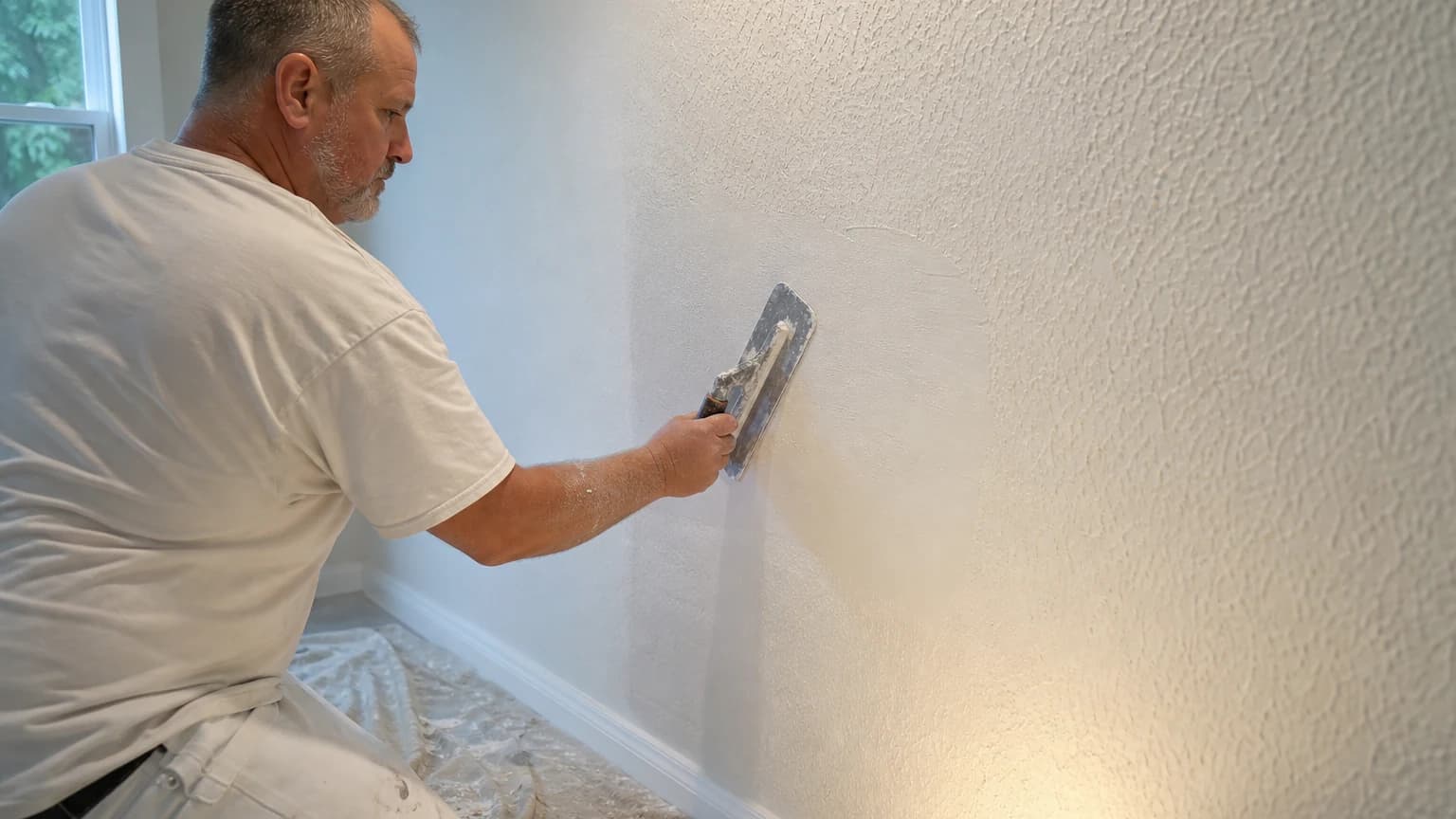
Texture matching means recreating a wall's existing pattern — orange peel, knockdown, or skip trowel — so a drywall patch blends in once it's painted. The key steps are identifying the exact pattern, prepping the patch flush with the surrounding surface, testing the technique before committing, and matching paint sheen. Skip trowel and old plaster are the hardest textures to match exactly.
If a drywall patch still stands out after the paint has dried, the paint usually isn't the problem — the texture underneath it is. Drywall texture matching in Chester County, PA is the step that decides whether a repair disappears into the wall or reads as an obvious patch under the right light. Most visible patches come down to one of three things: a texture technique that doesn't match the original, a rushed job that skipped testing the pattern first, or a paint sheen that makes even a close match stand out. This guide covers how the three common textures differ, how a matched patch actually gets blended in, and when matching isn't worth attempting at all.
Why a Drywall Patch Still Shows After It's Painted
A patch that's taped, sanded, primed, and painted correctly can still stand out if the texture underneath doesn't match the surrounding wall. Paint follows whatever surface is beneath it — it won't smooth out a flat patch sitting next to a textured wall, and it won't hide a texture pattern that's slightly the wrong scale or density. The three most common reasons a patch shows through paint are a texture technique that doesn't match the original wall, a rushed repair that skipped testing the pattern on scrap material first, and a paint sheen that makes even a close texture match visible under certain light.
None of these are hard to avoid once you know what to check before compound goes on the wall.
The Three Main Wall Textures in Main Line and Chester County Homes
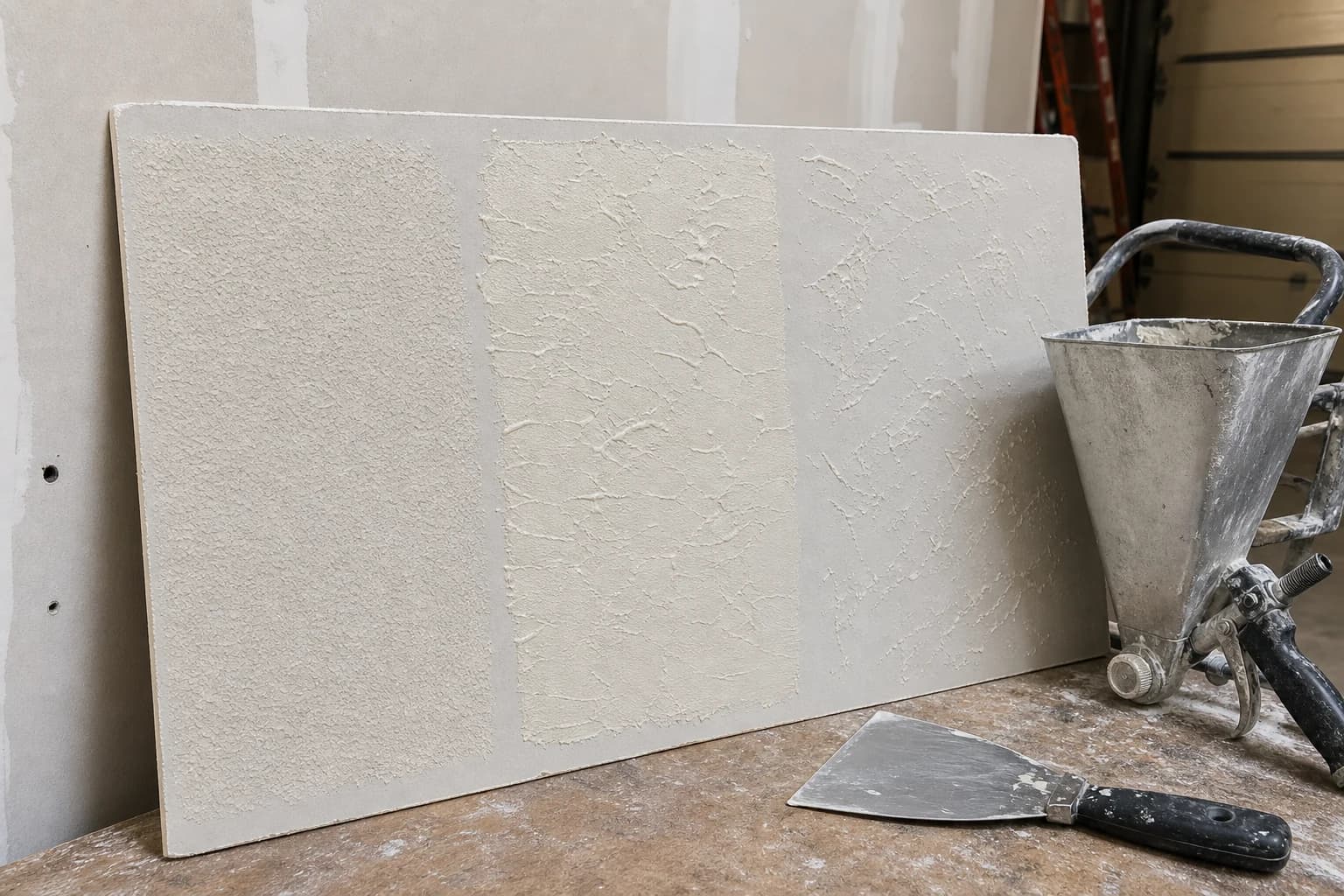
Most homes in the area have one of three drywall textures, and each one gets matched a different way:
- Orange peel — a fine, bumpy spray texture that looks like the surface of citrus peel. It's the most common texture in newer Chester County construction and the easiest of the three to match closely, since it's sprayed on and left alone with no hand-finishing step.
- Knockdown — starts as a heavier spray pattern, then a wide knife flattens the peaks before the compound sets, leaving flat, irregular islands with soft edges. Matching it means getting both the spray pattern and the flatten timing right; knock it down too early or too late and the result looks different from the surrounding wall even when the pattern itself is close.
- Skip trowel — a hand-applied, plaster-style texture with visible trowel marks and more depth than a sprayed finish. It's common in custom homes and older remodels, and it's the hardest of the three to match exactly, since every installer's hand movement creates a slightly different pattern.
A textured ceiling — popcorn or acoustic finish — is its own category with different handling than these three wall textures; our ceiling repair page covers that process separately.
How Drywall Texture Matching Works in Chester County, PA
Getting a texture to disappear into the surrounding wall comes down to four steps, done in order:
- Identify the exact texture. Look at the pattern up close, note the wall's age, and check whether the surrounding area already has a previous patch — layering a new mismatch onto an old one makes both more visible.
- Prepare the patch flush. A taped and coated repair needs to sit level with the surrounding wall before texture goes on; a patch that's slightly proud or recessed will telegraph through even a well-matched texture.
- Test before committing. Spray or hand texture gets tried on a scrap piece of drywall or an inconspicuous spot first, checking pattern size, compound thickness, and how long to wait before knocking it down or feathering it.
- Blend and feather the edges. The textured area gets feathered into the surrounding surface rather than stopping at a hard edge, so the transition doesn't read as a visible line once it's painted.
Our texture matching crews follow this same sequence on every repair — orange peel, knockdown, skip trowel, or a smooth Level 5 finish — because skipping the test step is the single most common reason a patch doesn't disappear.
Why Lighting and Paint Sheen Make or Break a Match
A patch can look invisible in flat daytime light and still show up clearly at night under a lamp or overhead fixture. Light that hits a wall at a low angle — from a window, a floor lamp, or a ceiling fixture close to the wall — exaggerates any difference in texture height or pattern, an effect sometimes called raking light. A patch that's a close but not exact match can pass in normal lighting and still cast faint shadows under raking light.
Paint sheen plays a similar role. Flat and matte paints scatter light and hide small texture differences well. Satin, eggshell, and especially semi-gloss and gloss sheens reflect more light and make any texture inconsistency more visible, which is why a wall that just had a texture-matched patch usually looks better finished in a flatter sheen than a high-gloss one, especially in rooms with strong natural light or track lighting.
Plaster Walls Are Their Own Category
Homes around Wayne, Malvern, and older sections of the Main Line often have plaster over wood lath instead of drywall, and plaster texture doesn't match the same way orange peel or knockdown does. Plaster finishes vary by era and by the original installer's hand, from a smooth sand-float finish to a heavily textured surface, and there's rarely a spray pattern to replicate.
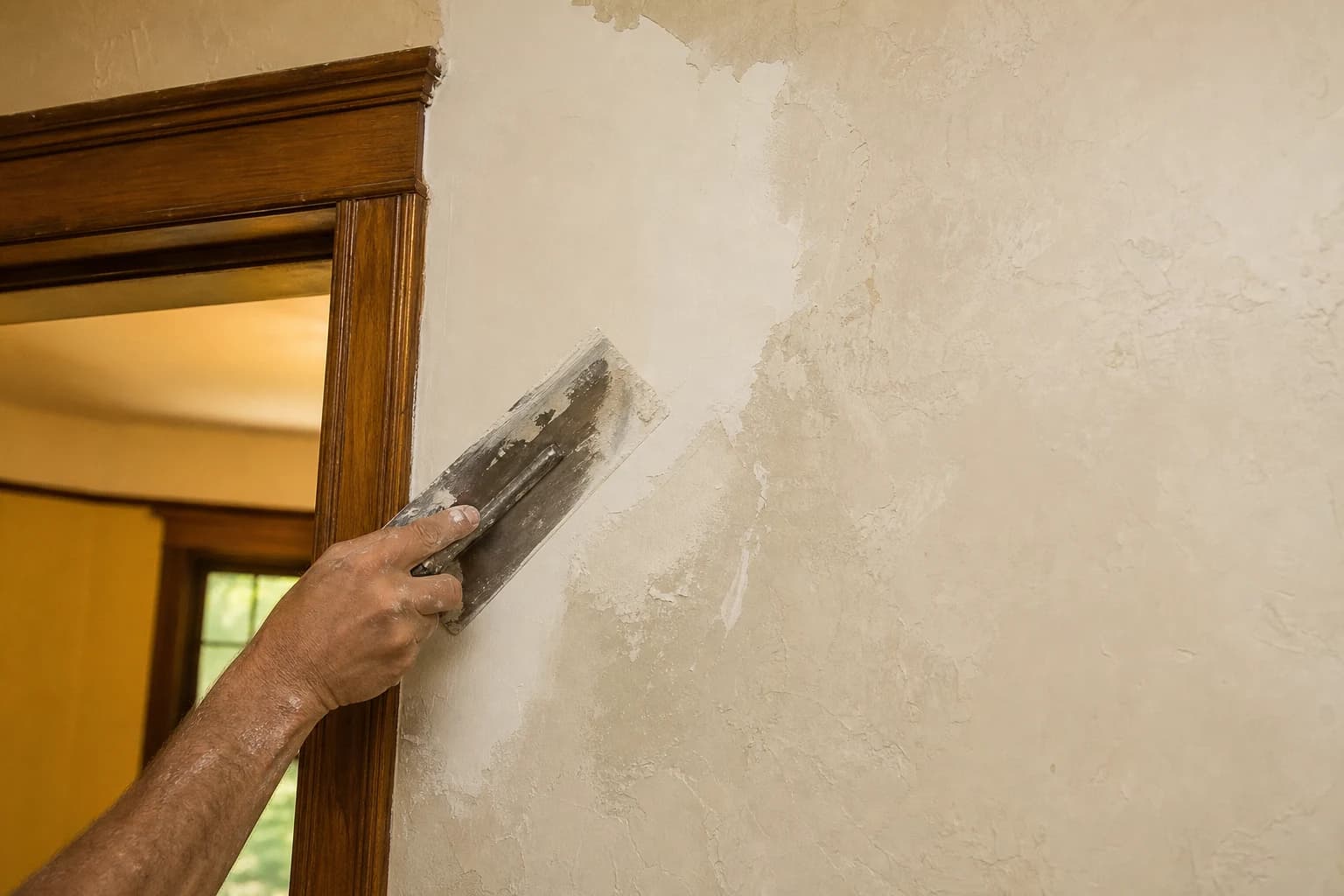
A plaster-specific repair usually gets a closer result than treating an old plaster wall like standard drywall, since it accounts for the different thickness, hardness, and finish profile plaster has compared to drywall.
When Matching Isn't Worth It — and Skim Coating Makes More Sense
Not every texture is realistic to match. A heavily hand-troweled skip trowel finish, a wall that's had several mismatched patches over the years, or an old plaster surface with decades of paint buildup can all make a perfect match unrealistic no matter how careful the work is. In those cases, skim coating — applying a thin, smooth layer of joint compound across the entire wall or ceiling rather than just the patch — resets the whole surface to one consistent finish instead of trying to blend a new patch into an inconsistent one.
A full skim coat is more work than a single patch since it covers the whole surface rather than just the damaged area, but it removes the guesswork of matching an old or uneven texture. It's worth considering anytime a wall has been patched more than once, when the existing texture is heavily worn or uneven, or when a homeowner is repainting in a higher sheen that would make any texture mismatch more obvious.
DIY Texture Touch-Up vs. Calling a Professional
A small orange peel patch in an out-of-the-way spot, like inside a closet, is a reasonable project for a homeowner comfortable with a texture kit and a bit of patience for testing first. Consider bringing in a professional when:
- The texture is knockdown or skip trowel, where timing and hand technique matter more than the product used.
- The patch is in a highly visible area, like a main living space or a wall lit by a window or track lighting.
- The wall is plaster rather than drywall.
- More than one patch has already been attempted in the same spot without blending in.
- You'd rather have the whole wall or ceiling skim coated than risk a visible patch.
If you're not sure which category your wall falls into, Main Line Drywall offers free written estimates for texture matching and full skim coats across Chester County and the Main Line. You can also call to talk through what you're seeing at (484) 202-0548.
Frequently asked questions
- Can drywall texture always be matched perfectly?
- Many textures, especially orange peel and knockdown, can be matched very closely. A perfect match depends on the wall's age, how many paint layers are on it, the sheen, the lighting in the room, and whether the original texture was applied consistently in the first place. Skip trowel and old plaster are the hardest to match exactly.
- What's the difference between knockdown and orange peel texture?
- Orange peel is a fine, rounded spray texture with no hand-finishing step. Knockdown starts the same way, but a wide knife flattens the peaks before they set, leaving flatter, irregular shapes with softer edges. Knockdown takes an extra step and more precise timing to match correctly.
- Why does my patch look fine in the daytime but show up at night?
- Light that hits a wall at a low angle — from a lamp, a window, or a ceiling fixture — exaggerates small differences in texture height, an effect sometimes called raking light. A patch that's a close match can look invisible in flat daylight and still cast faint shadows under angled light at night.
- Can drywall texture be matched to an old plaster wall?
- It can be blended, though not matched stroke for stroke. Plaster texture varies by era and by the original installer's hand, so the approach is feathering compound further out and hand-texturing to approximate the surrounding surface rather than replicating a spray pattern.
- Is it cheaper to patch and match texture, or skim coat the whole wall?
- A single patch is usually less work than a full skim coat since it only covers the damaged area. But once a wall has multiple mismatched patches or heavily worn texture, a full skim coat can end up being the more efficient option since it resets the whole surface instead of blending a new patch into an already inconsistent one. A written estimate after an in-person look is the only reliable way to know which makes sense for a specific wall.
Get a Texture Match You Can't See
Most texture mismatches come down to skipping the test step or using the wrong technique for the wall. Main Line Drywall tests every patch before committing to it and offers free written estimates for texture matching and full skim coats across Chester County and the Main Line.