
Repair Guides
Plaster Repair in Chester County, PA: When to Patch, Re-Secure, or Replace Old Plaster
Quick answer
Hairline plaster cracks can usually be filled and painted. Bulging, sagging, or hollow-sounding plaster has often lost its grip on the lath and needs to be re-secured or replaced, not just patched. Cracks that keep returning may point to movement or moisture. In a home built before 1978, ask about lead-safe practices before sanding or scraping anything.
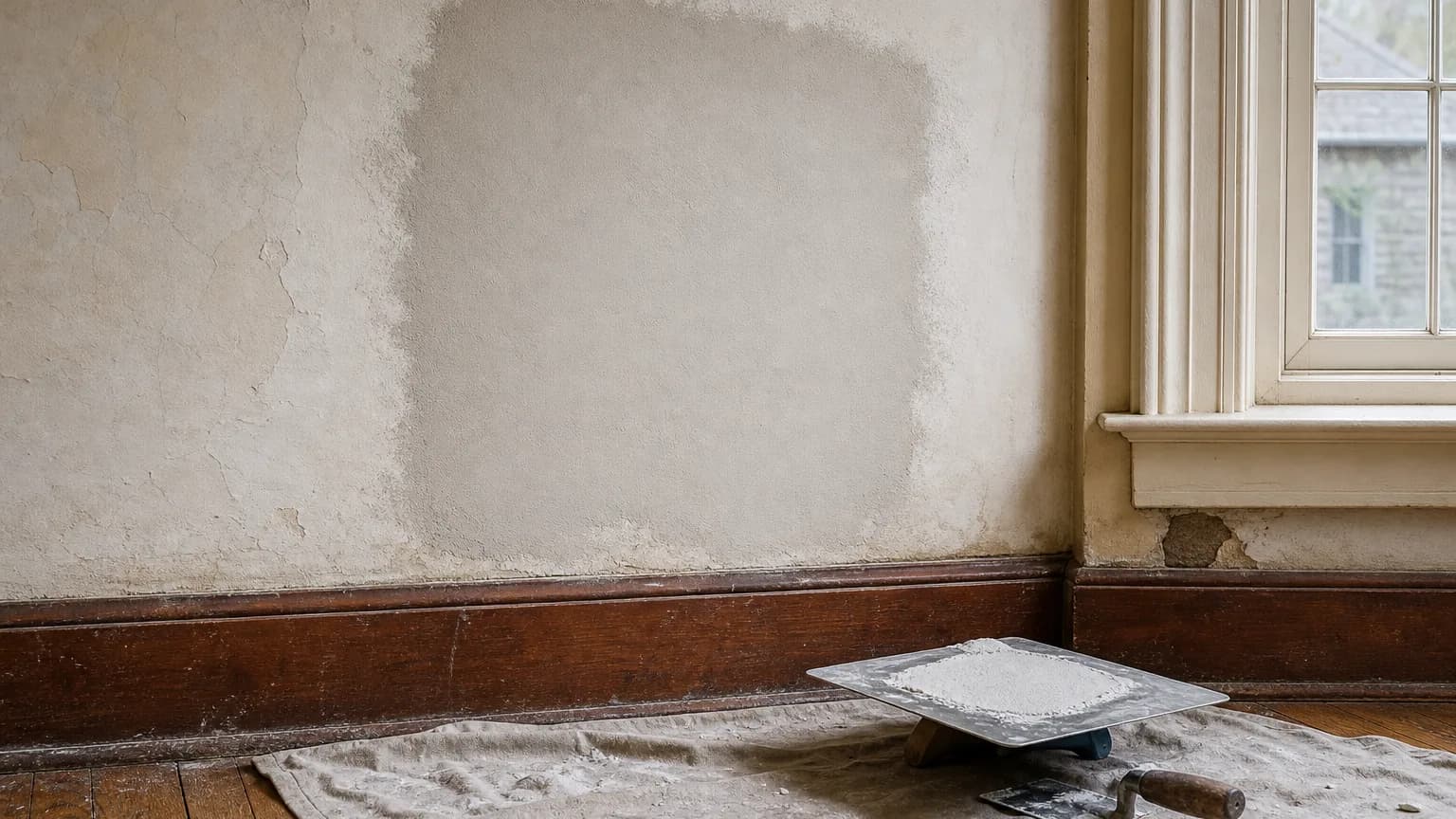
Most plaster problems fall into one of three groups: a cosmetic crack that can be filled, plaster that has come loose from the wood lath behind it and needs to be re-secured, or a section too far gone to save. Plaster repair in Chester County, PA starts with telling those apart, because the fix for each is different and a quick patch over a loose section tends to fail again. This guide explains how to check your walls and ceilings, what each repair involves, and what to ask before anyone sands an older painted surface.
Why Old Plaster Behaves Differently From Drywall
Many older homes around Wayne, Malvern, West Chester, and the rest of the Main Line have plaster applied over thin strips of wood called lath. The first coat was pressed through the gaps between the strips so it slumped over the back and hardened into small "keys" that hold the wall to the lath. The National Park Service's guidance on historic flat plaster describes this mechanical bond, and notes that structural movement, rotting lath, or rusted nails can break it.
That's the main reason plaster repair is its own skill. Drywall is a flat panel screwed to framing. Plaster is a hard, brittle, multi-coat surface that depends on those keys. When they fail, the plaster can look fine and still be loose.
How Can You Tell a Cosmetic Crack From Loose Plaster?
Start with a slow walk-through in good light, then check each problem area. Wear gloves and a dust mask, and don't scrape or sand anything yet.
- Thin, straight hairline cracks with a flat surface on both sides are usually cosmetic.
- Cracks with one edge higher than the other, or cracks that reopen every season, suggest movement behind the surface.
- A bulge or sag, especially on a ceiling, means the plaster may have separated from the lath.
- A section that flexes under gentle hand pressure or sounds hollow when you tap it deserves a professional look before any patching.
- Powdery, flaking, or stained plaster points to moisture, and the source has to be found first.
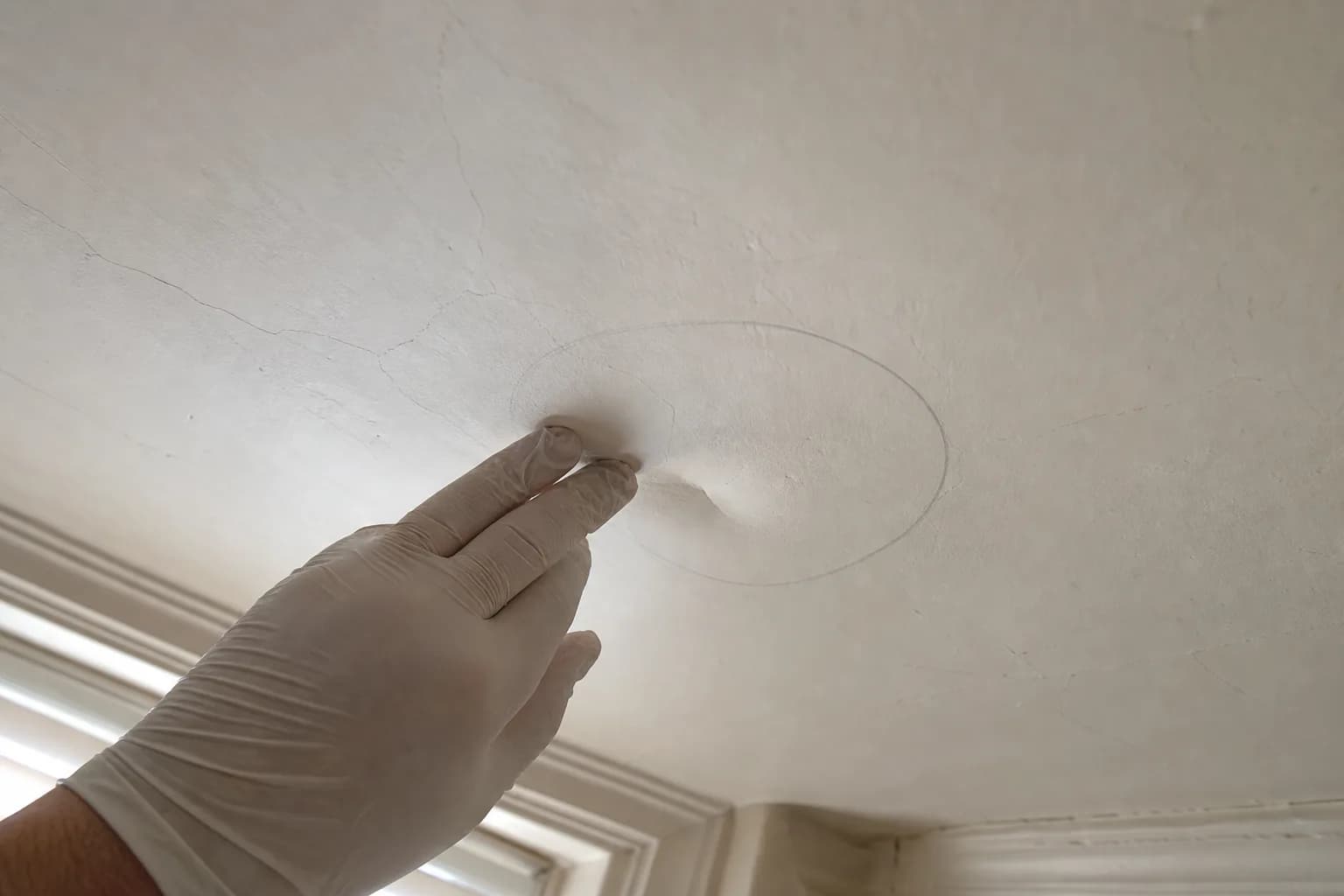
Pressing is a rough check, not a diagnosis. If a spot moves, mark it with pencil and stop pushing, since loose plaster can break away. Our plaster repair page outlines how we inspect for movement, softness, and moisture history before recommending a fix.
What Are the Main Plaster Repair Options in Chester County?
The right repair depends on what you found. In rough order from lightest to heaviest:
- Fill and finish. Hairline cracks are cleaned out and filled with compound, then feathered and primed. The National Park Service notes that hairline cracks can be repaired with patching compound, while persistent cracks are typically opened slightly and filled.
- Reinforce. For a crack that keeps moving, mesh tape bedded in compound bridges the gap so the repair flexes less. The National Park Service describes fiberglass mesh tape for recurring movement.
- Re-secure. Loose but intact plaster can sometimes be fastened back to the lath. This is skilled work, and it isn't possible in every case.
- Cut out and rebuild. Plaster too weak to save is removed back to sound material and rebuilt, either with new plaster or with drywall feathered into the surrounding wall.
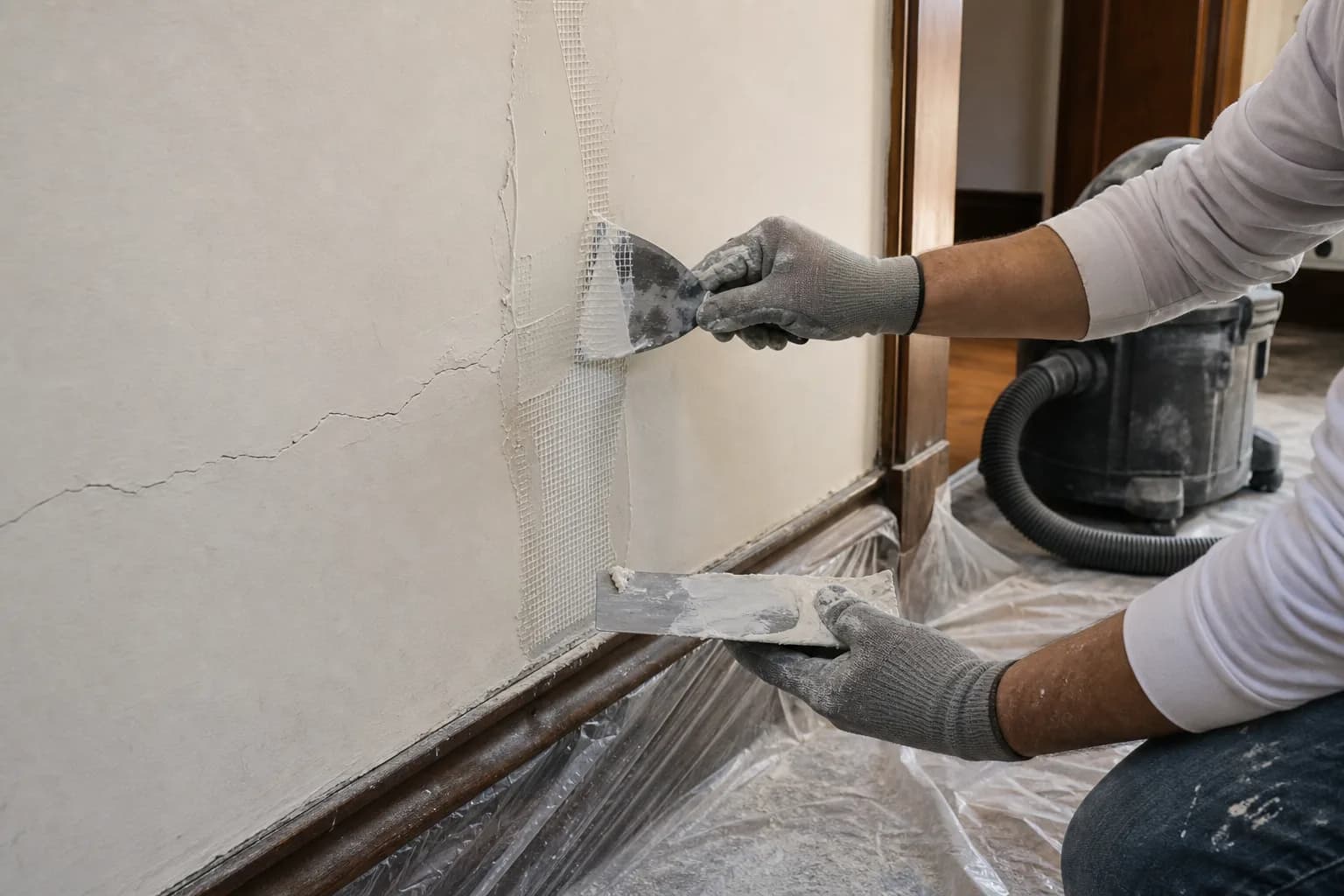
Preservation guidance generally favors repairing plaster over replacing it, and removing a whole wall is usually a last resort. Where a section does have to come out, a hybrid repair is common. The damaged area becomes drywall, and the edges are blended back into the plaster. Our drywall repair team handles that transition, and a texture matching pass helps the new area read as part of the same wall.
Should You Fix the Cause Before You Patch the Plaster?
Yes. Plaster that is stained, soft, or flaking often traces back to a roof leak, a plumbing problem, or condensation. Patching over a wet wall hides the symptom, and the repair can fail once moisture returns. Confirm the source is fixed and the area is dry first. If water damage is part of the picture, our water-damage repair page explains how damaged sections are handled after the leak is resolved.
Ceilings deserve extra caution because gravity works against a loose section. A sagging plaster ceiling should be treated as a safety question, not a cosmetic one, and kept clear of foot traffic and furniture until it's been assessed. For stains and cracks that are stable and dry, our ceiling repair page covers the usual approach.
Is Lead Paint a Concern When Repairing Plaster in an Older Home?
It can be. The EPA says a home built before 1978 may have lead-based paint, and that renovation, repair, or painting in such a home can create hazardous lead dust. Sanding, scraping, and cutting into painted plaster are exactly the activities that do this.
- Ask a contractor how they contain dust and clean up in a pre-1978 home. EPA rules require firms doing paid work that disturbs lead-based paint in these homes to be certified and to follow lead-safe work practices.
- If you plan to do the work yourself, read the EPA's lead-safe renovation guidance first. It recommends testing by a certified lead inspector or risk assessor, misting surfaces before sanding, and using a HEPA vacuum for cleanup.
- Keep children and pregnant family members out of the work area, and don't dry-sweep plaster dust.
This isn't meant to alarm you. Plenty of older homes have been repaired safely. It's a reason to plan the dust control before the first pass with a sanding block, not after. You can read the EPA's advice directly in its lead-safe renovation guide for DIYers.
How Do You Get a Plaster Repair to Blend After Paint?
Plaster walls are often smooth and hard, and they carry decades of paint. A repair that is only slightly proud or slightly low will show, especially when light rakes across the wall from a window. Getting an invisible result usually comes down to feathering the compound well beyond the damaged spot, sanding gently, and priming the whole repair before paint, so the patch doesn't absorb paint differently from the surrounding wall.
In some rooms, a light skim coat over the whole wall gives the cleanest finish, particularly where earlier patches overlap. Older ceilings and walls with layered repairs often benefit from that wider approach. It costs more than a spot patch, so it's worth asking whether a spot fix will blend or whether the whole surface needs it.
When Is It Time to Call a Plaster Repair Contractor?
A small, stable, dry hairline crack is a reasonable DIY project if you're careful about dust. Call a professional when:
- Plaster bulges, sags, or feels hollow.
- A crack has reopened after being filled once already.
- Stains or soft spots suggest moisture.
- The wall or ceiling has several old patches that don't match.
- The home was built before 1978 and the repair will disturb painted surfaces.
Main Line Drywall is based in Exton and serves homes across Chester County and the Main Line, including Wayne, Malvern, and West Chester. You can read more about the team on our About section.
Frequently asked questions
- Can cracked plaster be repaired instead of replaced?
- Often, yes. Hairline and stable cracks can usually be filled or reinforced with mesh tape. Replacement is generally reserved for sections that are loose, crumbling, or damaged by long-term moisture. A contractor needs to look at the wall to say which category yours falls into.
- Why does my plaster crack keep coming back?
- A crack that reopens after being filled usually means something behind the surface is still moving, or moisture is involved. Reinforcing the crack with mesh tape and finishing it in wider coats helps, but the underlying cause should be identified rather than patched over repeatedly.
- Is a bulge in a plaster ceiling an emergency?
- Treat it as a safety concern until it's been assessed. A bulge often means the plaster has separated from the lath. Keep people and furniture away from the area below it, and have it inspected before anyone paints or patches over it.
- Can drywall be used to repair a damaged plaster wall?
- Yes. When a plaster section is too weak to keep, it can be cut out and replaced with drywall, and the edges are then feathered into the surrounding plaster. Results depend on the wall's condition, previous repairs, and how carefully the transition is finished.
- Do I need to worry about lead paint when repairing plaster?
- In a home built before 1978, it's worth planning for. The EPA says renovation work in such homes can create lead dust. Ask any contractor how they handle containment and cleanup, and follow EPA guidance if you're doing the work yourself.
Get a Second Set of Eyes on Your Plaster
If you're unsure whether a crack is cosmetic or something more, Main Line Drywall can look at it and give you a clear, written estimate. Request a free written estimate for your plaster repair, or call (484) 202-0548 if you'd rather talk it through.