
Planning Guides
Drywall Finish Levels Explained: Which One Does Your Room Need?
Quick answer
Drywall finish levels describe preparation from Level 0 through Level 5. Level 4 commonly suits smooth walls with flat paint; Level 5 adds a full-surface skim coat for demanding paint or lighting conditions. Those uses appear in GA-214-2021 and National Gypsum's summary. The room's specified assembly, decoration and lighting determine the choice. Get the level in writing.
If you are adding a room, finishing a basement or opening a wall, someone will eventually ask which of the drywall finish levels you want. Most people have never heard the term, and the answer changes how a wall looks once the paint is on. Our drywall installation service covers hanging, taping and finishing, and this guide explains what each level means so you can read an estimate with confidence.
What are the drywall finish levels?
Drywall finish levels are a six-step scale, Level 0 through Level 5, that describes how much taping and joint compound a gypsum board surface receives before decoration. The Gypsum Association describes the levels in GA-214-2021, Levels of Finish for Gypsum Panel Products, also explained in National Gypsum's finish-level guide. This homeowner overview uses that dated edition and manufacturer guidance; the current project specification and product instructions govern the actual work.
A higher number means more finishing work, not better board. Each level exists because different rooms need different surfaces. A garage wall does not need the same finish as a living room with a large window.
What does each level involve?
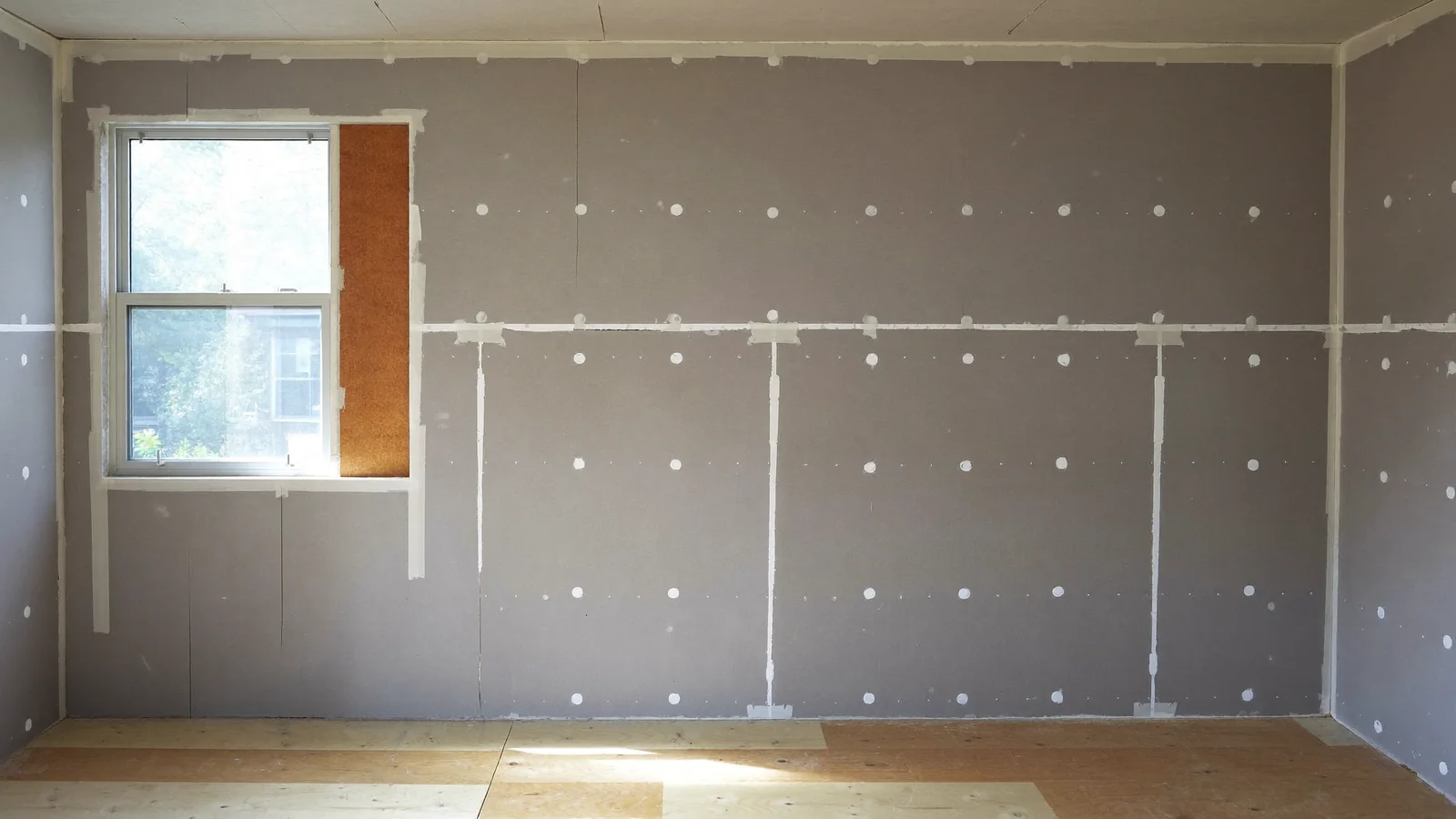
Each level sets requirements for joint treatment, fasteners, accessories and, at Level 5, the whole surface. This table summarizes the 2021 guidance and the manufacturer explanation; it is not a complete installation specification.
Swipe or scroll horizontally to read all columns. →
| Level | What it involves | Typical use |
|---|---|---|
| Level 0 | Board is hung, with no tape, finishing or accessories | Temporary construction, or when the final decoration is not yet decided |
| Level 1 | Tape is embedded at joints and interior angles; tool marks are acceptable; fasteners need not be covered | Smoke barriers and areas not open to public view |
| Level 2 | Tape and a thin compound layer at joints and interior angles; fasteners and accessories covered; tool marks may remain | Substrate for tile, and utility spaces such as garages and storage |
| Level 3 | Additional coats over joints and fasteners; surface smooth and free of tool marks | Appearance areas that will get a heavy or medium texture before painting |
| Level 4 | Further flat-joint finishing, with the specified treatment of interior angles, fasteners and accessories; no tool marks | Flat-painted smooth walls, light textures and certain wallcoverings |
| Level 5 | Level 4 work plus a thin skim coat or suitable manufactured surface-treatment material over the entire surface | Smooth walls with non-flat, glossy or deep-tone paint, and walls under critical lighting |
The scale concerns the surface before decoration, so the paint plan and finish scope need to agree. The cited guidance excludes smooth-wall designs from Level 3 and points to Level 5 for non-flat or dark paint. Primer and final paint remain separate parts of the specification. A finish number does not replace the required fire, smoke or sound assembly, or select the correct tile-backer product for a room.
Which finish level does your room need?
For many flat-painted living spaces, Level 4 is a common starting point; demanding paint or lighting conditions warrant a Level 5 discussion. Our installation page says the same thing in practice: most residential walls receive a Level 4 finish before paint, and high-gloss paint, strong natural light or specialty walls may need a Level 5 skim coat, which we can quote separately.
Use these examples as a starting point, not a rule for your house:
- A bedroom or hallway with flat paint and ordinary light: typically Level 4.
- A living room with a large window, a long hallway lit from one end or a ceiling washed by a row of lights: worth discussing Level 5.
- A wall painted in a deep color or a satin, semi-gloss or gloss sheen: worth discussing Level 5.
- A wall that will be tiled: discuss Level 2 joint preparation where the specified gypsum product and tile assembly call for it.
- A garage or storage room where appearance matters less: ask about a lower appearance level while retaining the assembly requirements.
- A room that will get a heavy or medium texture: Level 3 is the typical choice. See the texture section below.
Our basement finishing service is one place where different rooms in one project may call for different levels. If a basement has had moisture problems, our guide to basement finishing and moisture checks explains why to resolve that before any drywall goes up.
Why do light and paint sheen change the answer?
Light that skims across a wall, and paint that reflects, make small surface differences visible. A joint that looks flat in a still, even room can show up as a faint line when a window or lamp lights the wall from the side. National Gypsum's summary describes Level 5 as giving a more uniform surface and reducing joint photographing and fastener show-through.
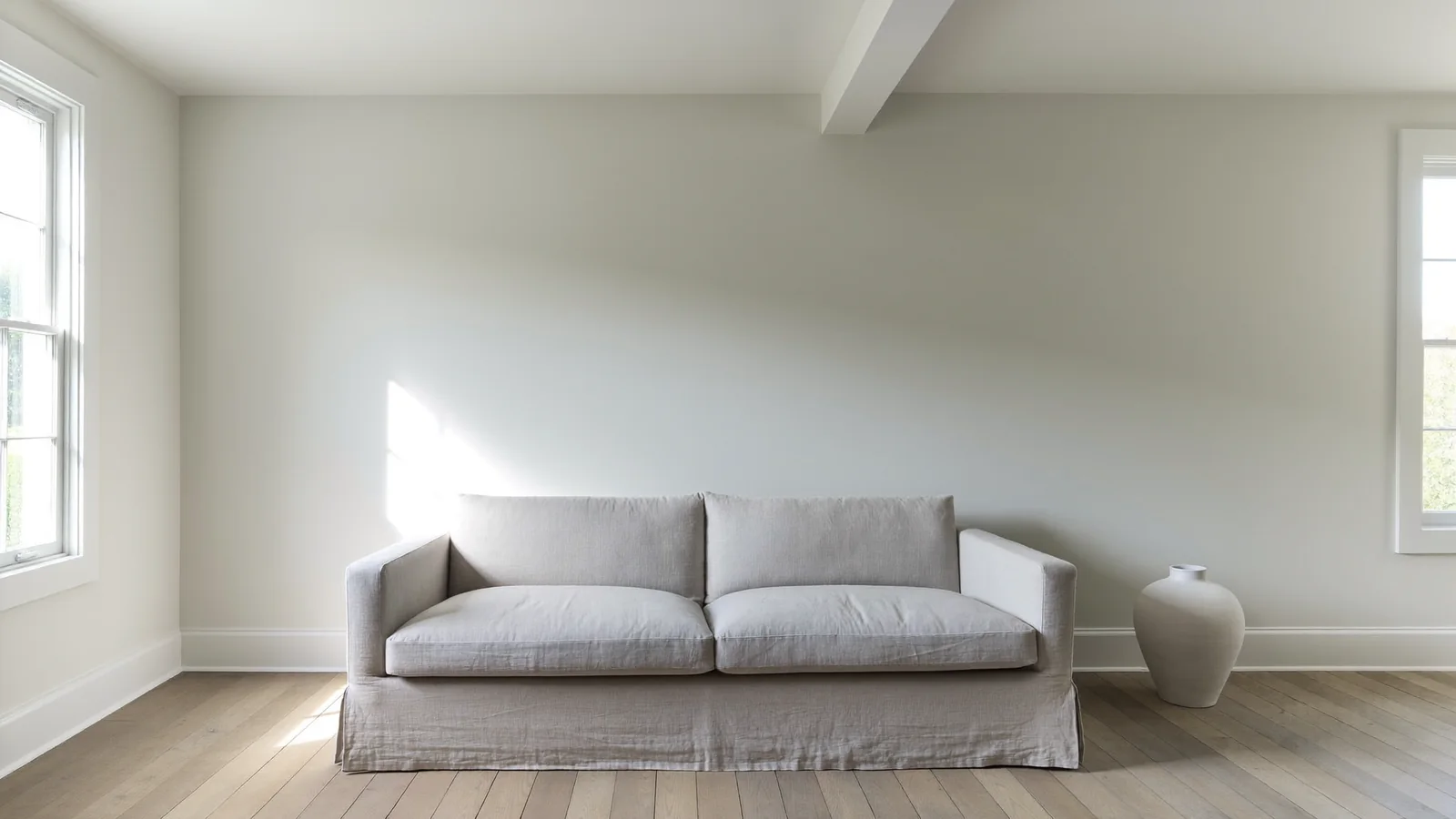
That is why the finish level and the paint plan belong in the same conversation. Flat paint hides more. Glossier paints and deep colors reveal more. If you are still deciding on a sheen, tell your estimator before the walls are finished, because changing the level later means redoing work.
Our guide on why a drywall patch still shows after painting covers the same effect for repairs, including why lighting and paint sheen can make or break a match.
Not sure which condition your room presents? Request a free written estimate and include the paint sheen, planned lighting and a few room photos so the finishing scope can be discussed together.
How do finish levels connect to texture?
Texture and finish level are related but not the same. The level describes how smooth the surface is before decoration. A texture, such as orange peel or knockdown, is applied afterward. Smooth finishes leave surface differences more exposed; texture does not eliminate the need to specify the underlying finish.
Our texture matching service lists "Smooth / Level 5" for skim coating and high-finish surfaces in rooms where light, paint sheen or design standards reveal every imperfection. If you are planning an addition and want the new room to blend with the old one, bring up the existing texture at the estimate stage so the finish level and the texture are planned together.
What should a written scope say about the finish level?
A good written scope names the finish level in plain words. Without that, "ready for paint" can mean different things to different people. These are questions to ask any drywall contractor, including us:
- Which finish level is included for each room?
- Is any room planned for a Level 5 skim coat, and is that quoted as a separate line?
- What paint sheen and color do you expect us to use, and does that change the level?
- Which walls get strong window light or accent lighting?
- Will any room get a texture, and how will it match the rooms next to it?
- Who primes, and who paints?
Our full guide to drywall installation in Chester County walks through what to expect from quote to finish, including how the taping and coat sequence works.
Frequently asked questions
- What drywall finish level is standard for homes?
- According to National Gypsum's summary of GA-214, Level 4 is typical for smooth walls that will be decorated with flat paint. Our installation page says most residential walls receive a Level 4 finish before paint, with Level 5 for high-gloss paint, strong natural light or specialty walls.
- What is the difference between Level 4 and Level 5 drywall?
- Level 5 adds a skim coat over the entire surface. The cited guidance describes it as a way to improve uniformity and reduce visible joint and fastener differences under demanding decoration or lighting. It is not a promise of a perfectly flat or flaw-free wall.
- Is Level 5 worth it?
- It depends on the wall. For a hallway with flat paint and even light, Level 4 is usually the practical choice. For a large wall with strong side lighting or a glossy finish, Level 5 can be worth quoting. We can look at the room and explain the trade-off in a written estimate.
- Does a smooth wall need Level 5?
- Not automatically. A smooth wall with flat paint and ordinary light is the typical case for Level 4. Glossier paint, deep colors and strong light are what push a smooth wall toward Level 5.
- Can I change the finish level after the drywall is finished?
- Sometimes, but it usually means more work. We can quote skim coating for a wall that needs a more consistent finish, though it is easier and clearer to settle the level before finishing starts. Tell your estimator about paint sheen and lighting early.
Get the Finish Level in Writing
If you are planning an addition in Exton, a remodel in West Chester or another drywall project in our Chester County and Main Line service area, we can walk through the rooms and put the finish level for each one in a written estimate. Request a free estimate, or call (484) 202-0548.
Sources
- Gypsum Association, GA-214-2021: Levels of Finish for Gypsum Panel Products, hosted by member American Gypsum; 2021 edition read October 26, 2026.
- National Gypsum: Discover five levels of gypsum board finish (August 22, 2022).
- Main Line Drywall service pages: Drywall installation and Texture matching, read October 26, 2026.