
Planning Guides
Basement Finishing in Chester County, PA: Check for Moisture Before You Drywall
Quick answer
Before finishing a basement in Chester County, check for efflorescence, musty odors, damp corners, and a sump pump that runs often, then confirm with a plastic-sheet or moisture-meter test over several days. If relative humidity stays around 50-55% and the walls test dry through at least one rain event, the space is generally ready. If not, fix the water source before any drywall goes up.
If you're planning basement finishing in Chester County, PA, the first step isn't paint colors or a layout — it's making sure the space is actually dry enough to build on. Framing, insulation, and drywall all trap moisture behind them once they're installed, and a basement that seemed fine unfinished can grow mold within a season if water is still getting in. This guide walks through the moisture signs worth checking, a simple test you can run yourself before hiring anyone, and what typically needs fixing before the drywall goes up.
Why Moisture Comes First in Basement Finishing in Chester County, PA
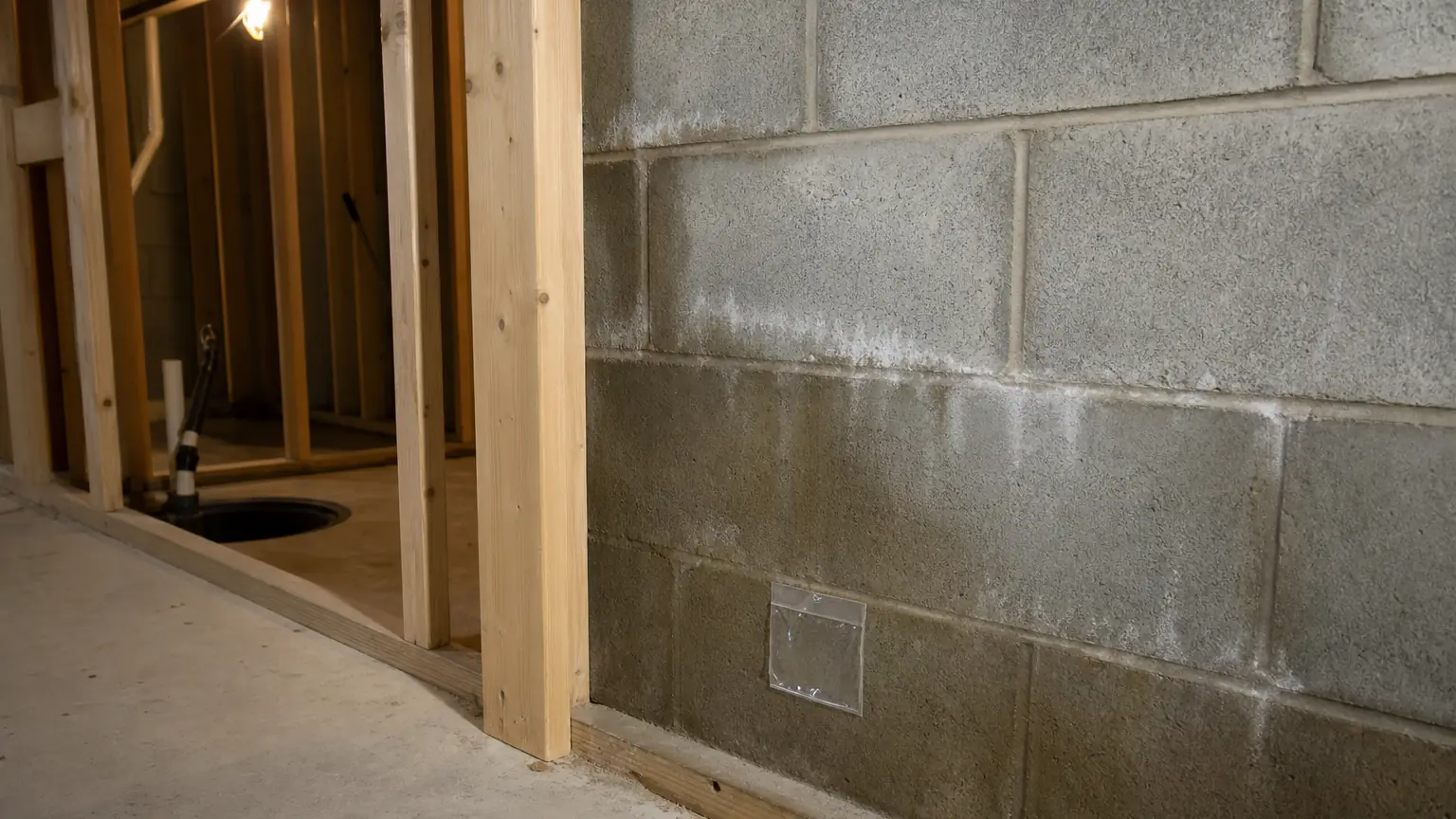
Chester County has a lot of clay-heavy soil, and many homes here — especially in older sections of Exton, West Chester, and the Main Line — were built with stone or block foundation walls before modern exterior drainage was standard practice. Those walls can let groundwater through slowly, especially during wetter stretches of the year, even when nothing looks obviously wrong on a dry day. Newer homes with poured concrete foundations generally handle water better than older stone or fieldstone walls, but a poured foundation with a cracked control joint or a missing exterior drain can let moisture through just as easily.
Older homes around Malvern and Wayne, many with original fieldstone or rubble foundations, tend to need this kind of check even more than newer construction, since those walls were rarely built with a modern drainage layer behind them.
An unfinished basement can handle some of that moisture because air moves freely and concrete can dry out between rain events. Finishing changes that. Once framing, insulation, and drywall go up against a foundation wall, that assembly holds moisture against the wall instead of letting it evaporate, which is exactly the environment mold needs. That's why checking for moisture is the first step in basement finishing, not an afterthought before paint.
Signs Your Basement May Have a Moisture Problem
Before scheduling any drywall work, walk the basement and look for:
- Efflorescence — a white, chalky, powder-like deposit on block or concrete walls, left behind as water evaporates and minerals stay put.
- A musty or earthy smell, especially in a closed-up basement or storage area.
- Corners or wall-to-floor joints that feel damp or noticeably cooler after a heavy rain.
- A sump pump that cycles on frequently, even outside of storm events.
- Condensation beading on cold water pipes, ductwork, or the underside of floor joists.
- Peeling paint, rust on metal fixtures, or a baseboard that warped from a previous finish attempt.
Any one of these is a reason to look closer before finishing, not necessarily a reason to assume the worst.
How to Test for Basement Moisture Before You Drywall
A simple plastic-sheet test is a good first check and doesn't require special tools:
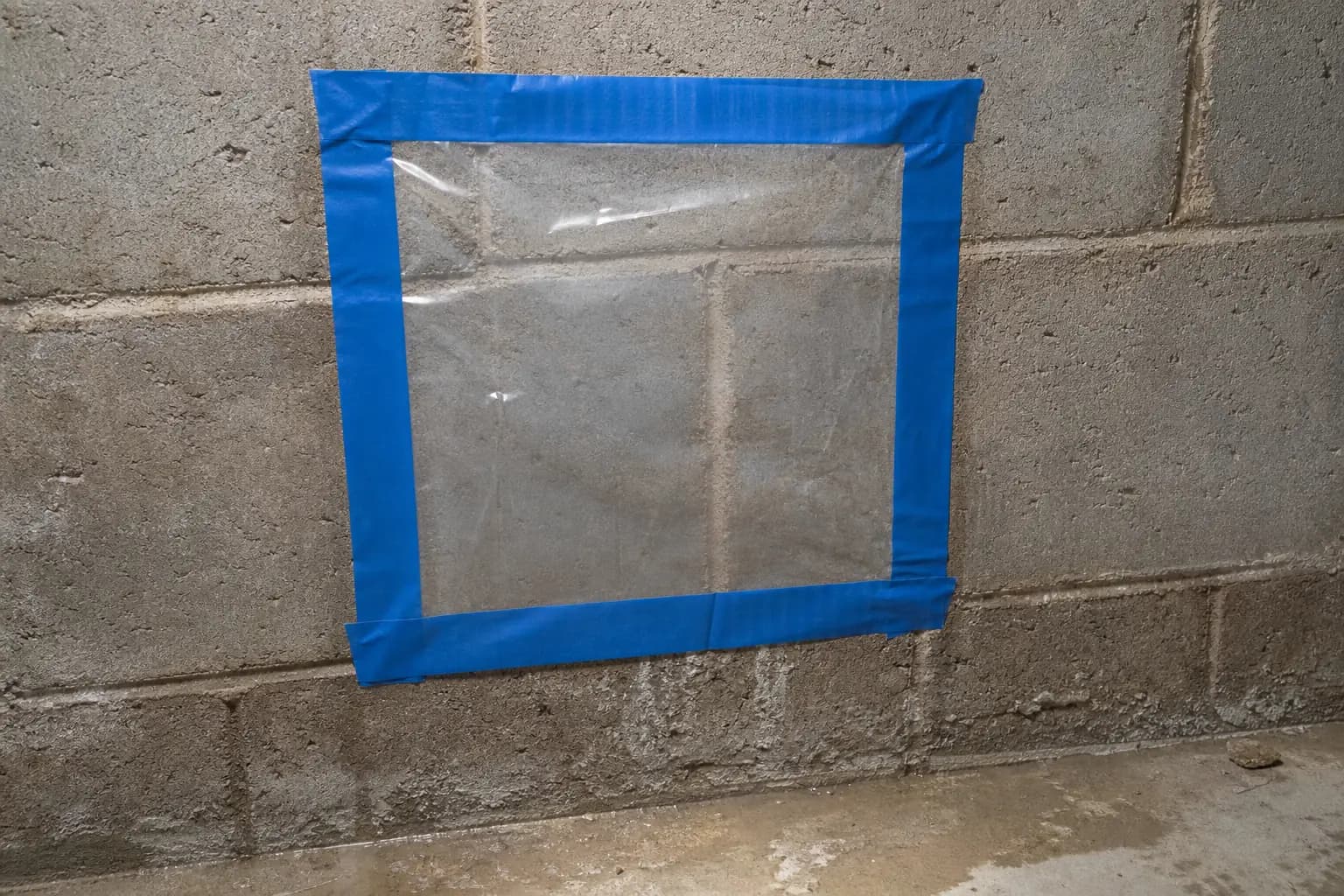
- Tape a roughly 12-by-12-inch square of clear plastic sheeting tightly to the concrete floor or foundation wall, sealing all four edges.
- Leave it in place for at least 24 hours — several days is better, especially if you can test through a rainy stretch.
- Check both sides: condensation on the outer surface points to humidity in the room air; moisture trapped underneath, against the concrete, means water is moving through the material itself.
- A basic moisture meter, held against the wall or slab, gives a more precise reading if the plastic test comes back unclear.
As a general target, building-science guidance points to keeping a finished space under roughly 50-55% relative humidity. Basements that run consistently higher than that, even without visible water, are more likely to support mold growth behind new drywall.
When to Test: Chester County's Wet Seasons
Timing the test matters as much as running it. Chester County's wettest stretches tend to come with spring snowmelt and periodic heavy summer storms, while July and August bring long stretches of humid, muggy air even without rain. Testing only on a dry, low-humidity day can miss a problem that shows up during the next soaking rain or a sticky August week. Where possible, run the plastic-sheet test across at least one rain event, and if you're testing in a dry season, plan to recheck once conditions turn wetter before finishing work begins.
What to Fix Before the Drywall Goes Up
If a test turns up moisture, the fix almost always starts outside the house, not inside it:
- Extend downspouts so they carry water several feet away from the foundation instead of dumping it at the base of the wall.
- Check that grading slopes away from the house rather than toward it.
- Clean and repair gutters so water isn't overflowing along the foundation line.
- Add interior drainage or a sump pump if groundwater is the source rather than surface runoff.
- Apply a vapor barrier or waterproof coating to foundation walls where recommended after the source is addressed.
- Run a dehumidifier for a few weeks and re-test before finishing, especially if the space has been damp for a while.
Fixing the source first protects the framing and drywall going in behind it, and it's a lot less disruptive than repairing a wall assembly after it's already built. If a sump pump is part of the fix, a battery backup is worth considering too — the pump is only useful if it keeps running during the kind of storm that also knocks out power.
What Affects the Cost of Fixing Basement Moisture
Homeowners often ask what it costs to fix a moisture problem before finishing, and the honest answer is that it depends on the source. Extending downspouts or correcting grading is usually a modest, contained job. Adding interior drainage, a new sump pump, or exterior waterproofing along a foundation wall is a larger scope, since it involves more labor and sometimes excavation. The size of the basement, how the water is getting in, and whether the fix is interior or exterior all affect the scope more than the finishing work itself. A written estimate after a site visit is the only reliable way to know which category a given basement falls into.
Choosing Materials Once the Basement Is Ready
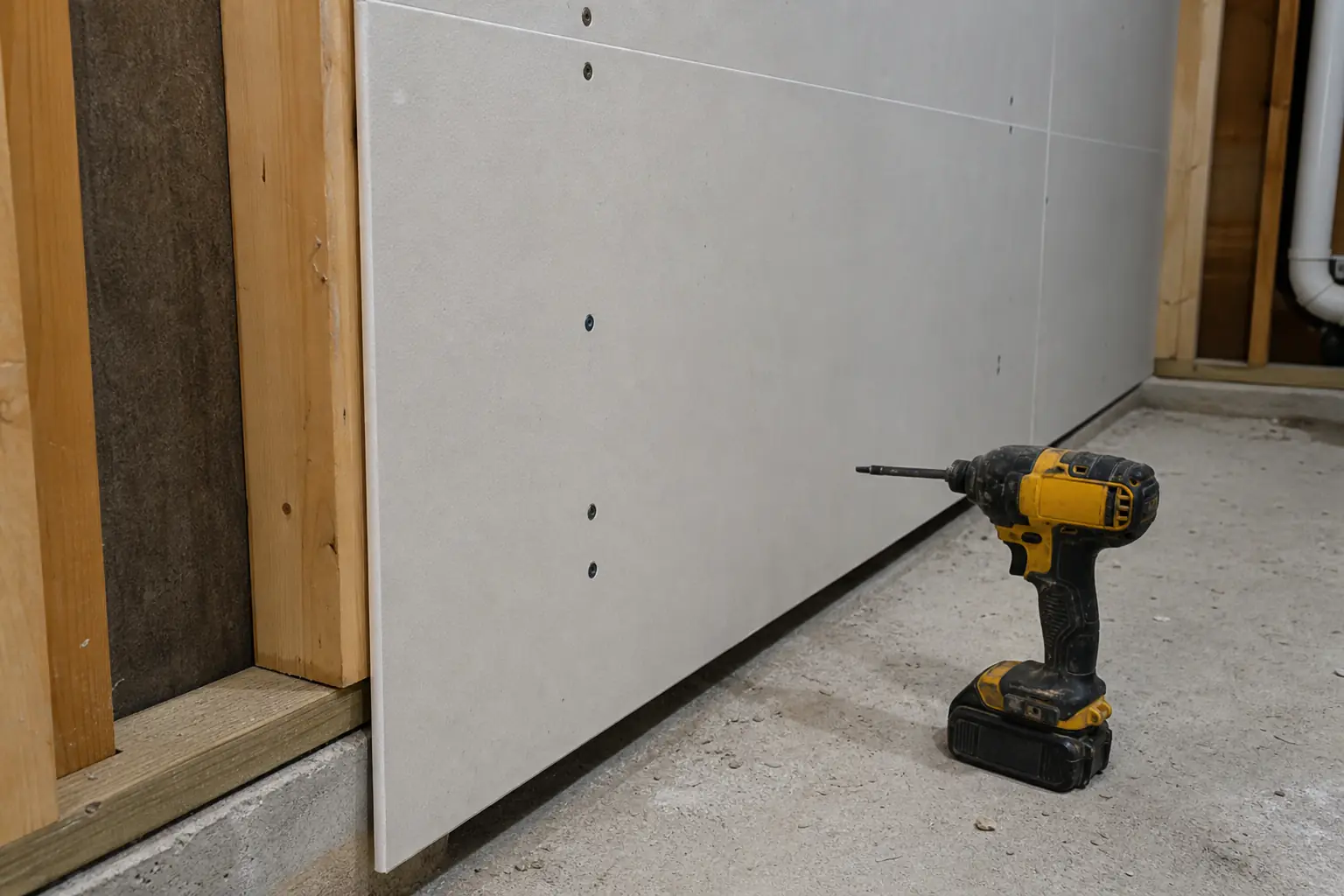
Once a basement tests dry, material choice still matters. Paperless, moisture-resistant drywall panels hold up better than standard paper-faced board in a below-grade space, since paper facing is the part mold typically grows on first. Framing and drywall installation in a basement should also keep the bottom edge of the wall board slightly off the slab — usually with a small gap later covered by baseboard — so incidental moisture on the floor doesn't wick straight into the wall.
Insulation choice matters too. Rigid foam board against the foundation wall handles occasional dampness better than fiberglass batts, which can hold water against the wall and take a long time to dry out if they do get wet. None of these material choices replace fixing the water source — they just give the finished space a better margin if humidity creeps up during a wet season.
DIY Checks vs. When to Call a Professional
The plastic-sheet test and a basic walk-through for signs are reasonable for any homeowner to do before making a decision. Where it's worth bringing in a professional:
- The test comes back damp, or you're not confident reading the result.
- The basement has a history of water — a prior flood, a known leak, or a wet spot with no clear cause.
- Efflorescence or a musty smell keeps returning after cleaning.
- You're evaluating whether a past water-damage repair fully resolved the issue before finishing over it.
A short evaluation before the framing starts is a lot less disruptive than opening up finished walls later to chase a moisture problem that was there from the beginning. If you're planning a basement finishing project anywhere in Exton, West Chester, or the surrounding Main Line, Main Line Drywall offers free written estimates and can walk the space with you before any work is scheduled. You can also call to talk through what you're seeing at (484) 202-0548.
Frequently asked questions
- Can I skip the moisture test if I don't see any obvious problems?
- It's not a good idea. Some moisture issues only show up as slightly elevated humidity or occasional dampness that's easy to miss on a casual walk-through, especially on a dry day. A plastic-sheet or moisture-meter test takes little effort and catches problems before they're sealed behind new drywall.
- What humidity level is considered safe for a finished basement?
- Building-science guidance generally points to keeping a finished space under roughly 50-55% relative humidity. Readings that stay consistently higher than that make mold growth more likely, even without a visible leak.
- Does having a sump pump mean my basement is dry enough to finish?
- Not by itself. A sump pump manages water that reaches the floor drain, but it doesn't address moisture moving through foundation walls or humidity in the air. Both should be checked separately before finishing.
- Is moisture-resistant drywall enough on its own, without fixing the water source?
- No. Moisture-resistant board holds up better than standard drywall if humidity rises occasionally, but it isn't designed to withstand ongoing water intrusion. Addressing grading, gutters, or drainage first is still the priority.
- How long should I wait after fixing a moisture issue before finishing the basement?
- Give it at least one full season, including a wet stretch, so you can re-test and confirm the fix is holding before framing and drywall go in. Finishing too soon after a repair risks trapping any moisture that wasn't fully resolved.
Get a Straightforward Look Before You Finish
Most basements in Chester County and the Main Line can be finished successfully once the water source is addressed. If you're not sure where yours stands, Main Line Drywall offers free written estimates and can walk the space with you before any work is scheduled.