
Repair Guides
Nail Pops in Drywall: What Causes Them and How to Fix Them
Quick answer
Nail pops in drywall are small round bumps or cracks where a nail or screw head has pushed out above the wall surface. Gypsum Association guidance points to lumber shrinkage, loose attachment, misaligned framing, the wrong fastener length and improper fastening as causes. The fix is to re-secure the board with a new fastener, set the old one just below the surface, then finish with joint compound and repaint. A single pop is usually cosmetic. A cluster along with cracks or sagging is worth a closer look.
You walk past a wall or look up at a ceiling and spot a small round bump, sometimes with a hairline crack around it, in a neat line where the studs or joists are. Those are nail pops in drywall, and they're one of the most common small repairs in homes of every age. Our drywall repair service handles them along with other small defects, but many homeowners want to understand the cause before deciding whether to fix them or call someone.
What does a nail pop look like?
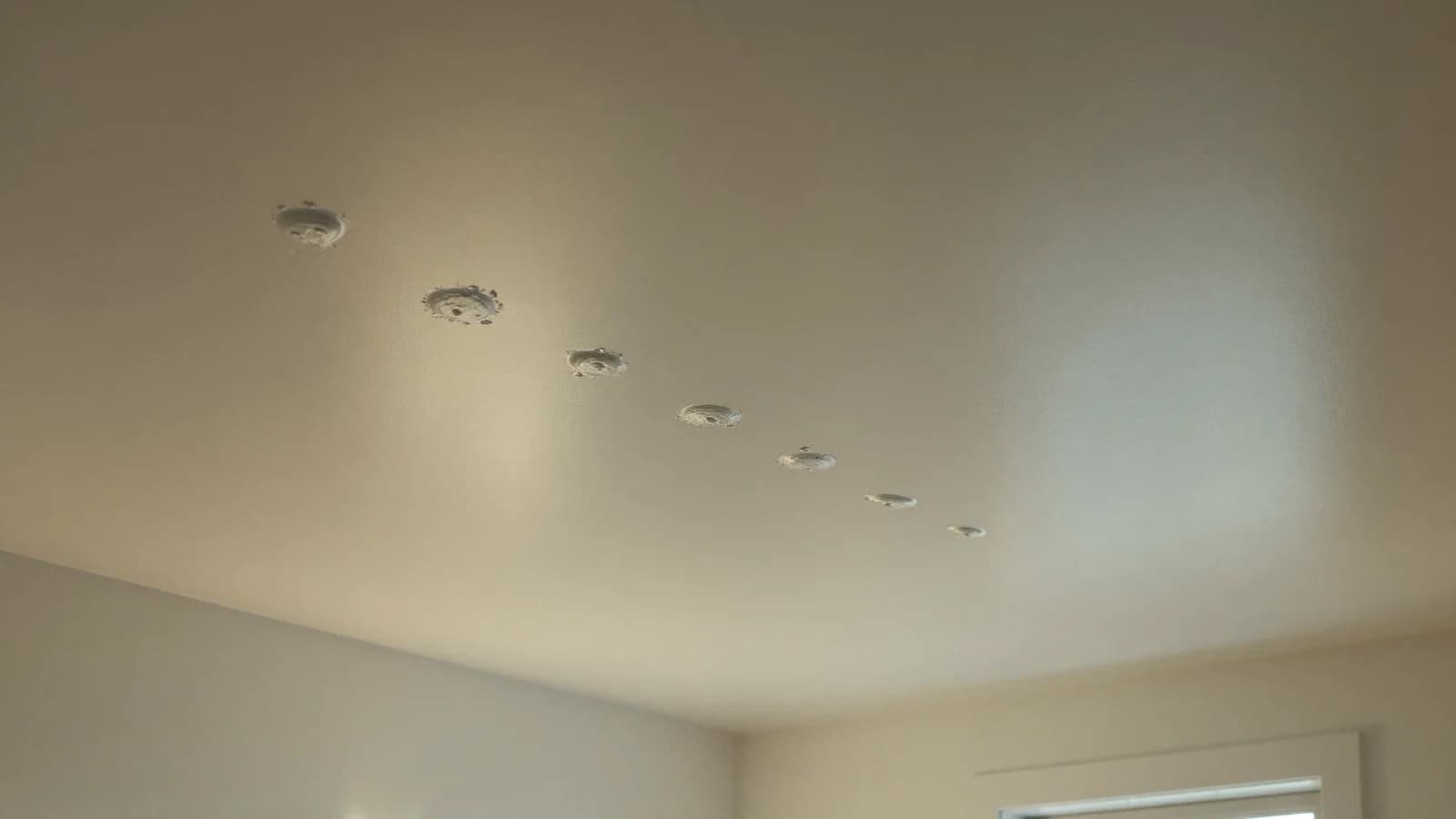
A nail pop is a small raised dot, ring or crack where a fastener head has pushed up through the finished surface. It's usually about the size of a fingertip, and it often lines up with other pops in a straight row along a stud or ceiling joist.
You may see:
- A round bump that catches the light, especially on ceilings or walls lit from the side
- A thin circular crack where the joint compound over the fastener has broken loose
- A small piece of paint or compound flaking off, showing the nail or screw head underneath
- A slight gap where the board has moved away from the framing, so the panel gives a little when you press near the pop
Drywall can be fastened with nails or screws. A popped screw is often called a screw pop, but the cause and the fix are the same.
What causes nail pops in drywall?
Most nail pops come from movement between the drywall and the wood framing behind it. The Gypsum Association's repair guidance, Repairing Screw or Nail Pops (GA-222), points to these causes:
- Lumber shrinkage after the drywall was installed
- Loose attachment of the drywall to the framing
- Framing that is misaligned, twisted, bent, warped or bowed
- Incorrect fastener length
- Improper fastening
The most common source, according to the guidance, is shrinkage of framing lumber that had a high moisture content when the home was built, and overly long fasteners add to the problem. As framing lumber dries and shrinks, the wood pulls back from the drywall. A nail or screw that was driven deep into the wood doesn't move with it, so the head ends up standing proud of the board's surface (Walls & Ceilings summary of GA-222-14).
That's why pops are common in newer construction and additions, where the framing lumber may still be drying. But they can appear in any home with wood framing, including older homes that have had a newer drywall repair, a renovation or an addition.
Why do nail pops show up in fall and winter?
The Gypsum Association links pops that appear during the heating season to lumber shrinkage. According to its repair guidance, pops that appear a month or more into the heating season usually come from shrinking framing, and the guidance says to wait until the end of the heating season to repair them.
In practical terms, if a row of pops shows up on a ceiling a month or two into a Chester County winter, it's often better to wait until spring to fix them. Fixing them mid-season risks seeing new pops appear as the wood keeps drying. The guidance makes one exception: pops that appear before or during painting and finishing should be repaired right away.
Homeowners also notice small cracks more in winter for the same reason. Our guide to drywall cracks in Chester County explains which cracks are normal seasonal movement and which deserve a second look.
How do you fix nail pops in drywall?
The fix is to pull the drywall back tight to the framing with a new fastener, then set the old one and finish over both. Simply hammering the popped nail back in tends to fail, because it doesn't solve the gap between the board and the framing.
A repair that follows the Gypsum Association's guidance works like this:
- Re-secure the board. Press the drywall firmly against the stud or joist, then drive a new screw or nail of the proper length into the same framing member, close to the popped fastener.
- Deal with the old fastener. Either remove it or reseat it so the head sits just below the face of the drywall without breaking the paper.
- Clean up the area. Remove any loose compound, paint or paper around the pop.
- Finish with joint compound. Apply compound over both fasteners, let it dry, and apply more coats as needed, sanding carefully between coats.
- Prime and repaint. Prime the patched spots so they don't flash through the paint, then repaint.
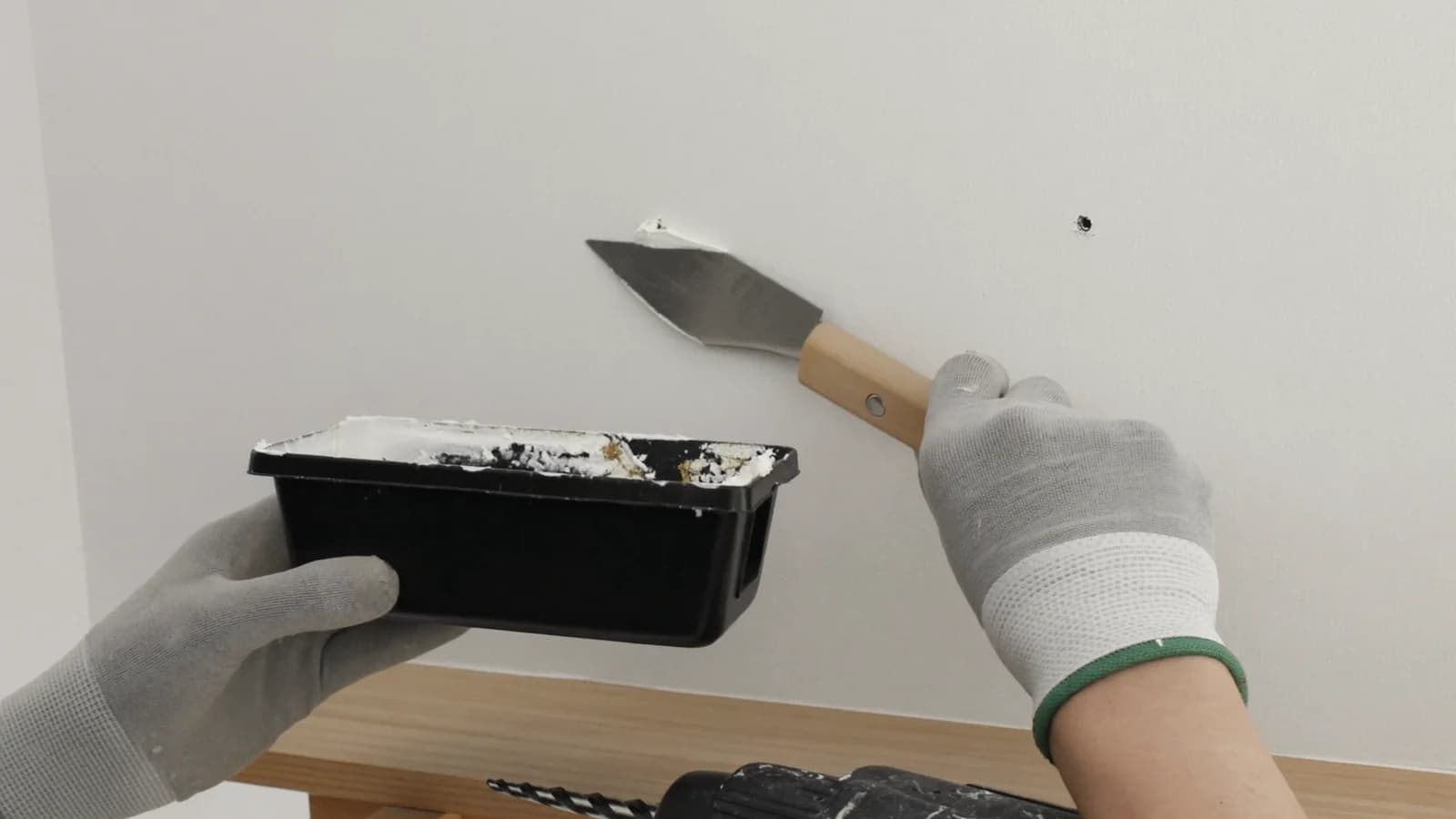
Walls & Ceilings' summary of the guidance stresses that secure reattachment is essential, that new fasteners should be the proper length, and that careful sanding and observing drying times matter before you repaint (Walls & Ceilings).
On a smooth wall or ceiling, the last coat and the paint are what make the repair disappear. On a textured surface, the patch may need its texture rebuilt to blend in. Our article on why a patch still shows after painting explains why.
Older homes: if your home was built before 1978, sanding painted surfaces can disturb lead-based paint. Read the EPA's guidance on lead-safe renovation and repair before sanding.
When is a nail pop a sign of something bigger?
A few scattered pops are usually cosmetic, but pops that come with other symptoms deserve a closer look. Movement that pushes fasteners out can also show up in other ways.
Have the area looked at if you notice:
- Many pops in one area along with sagging, especially on a ceiling, where the board may be pulling away from the joists
- Pops alongside new or widening cracks, particularly at door and window corners
- Pops near a water stain or soft spot, which can mean moisture is affecting the board or the framing
- Pops that keep coming back in the same spot after a proper repair
Ceiling pops near stains or sagging overlap with other ceiling problems. Our ceiling repair service covers water stains, sagging board, nail pops and cracks overhead.
DIY fix or call a pro?
A handful of wall pops is a reasonable DIY project if you're comfortable with a screw gun, joint compound and sanding. The steps are simple, and the materials are basic.
It usually makes sense to call a professional when:
- The pops are on a ceiling, where overhead finishing is harder to get smooth and working from a ladder adds risk
- There are dozens of pops across several rooms, and you want the finish consistent
- The wall has a texture you'd need to match
- The pops come with sagging, cracking or stains, as described above
- You want the repairs done alongside other patching, such as hole repair, so everything is finished and painted at once
Sources
- Gypsum Association, Repairing Screw or Nail Pops (GA-222). Current edition GA-222-14 is in the Gypsum Association's free download library at gypsum.org.
- Walls & Ceilings: Updated Recommendations for Gypsum Panel Product Repairs (GA-221 and GA-222)
- Building Design + Construction: Gypsum Association releases updates to wallboard repair standards (2014)
- U.S. EPA: Lead Renovation, Repair and Painting Program
Frequently asked questions
- Are nail pops in drywall a structural problem?
- Usually not. The Gypsum Association lists lumber shrinkage as the main cause, which is normal wood movement. Pops that come with sagging, widening cracks or water stains should be checked, because those can point to other issues.
- Can I just hammer a popped nail back in?
- It's better to re-secure the board first. The Gypsum Association calls secure reattachment of the board to the framing essential, using new fasteners of the proper length, before the old fastener is dealt with and the spot is finished. Hammering the old nail alone doesn't close the gap behind the board.
- Should I fix nail pops now or wait?
- If pops show up a month or more into the heating season, the Gypsum Association advises waiting until the end of the season, since the lumber may still be shrinking. Pops that appear before or during painting should be fixed right away.
- Do screws pop like nails do?
- Yes. GA-222 covers both screw and nail pops, and the causes and repair method are the same.
- Will the repair show after painting?
- On a smooth surface, careful finishing, sanding and primer usually blend the repair. On textured walls or ceilings, the texture may need to be rebuilt over the patch so it matches.
Get a Clear Answer on Those Pops
If you're seeing nail pops on a ceiling, a cluster across a room, or pops alongside cracks or stains, we can take a look and explain what we see. Request a free estimate, or call (484) 202-0548.