
Repair Guides
Drywall Crack Repair in Chester County, PA: Is It Normal or a Bigger Problem?
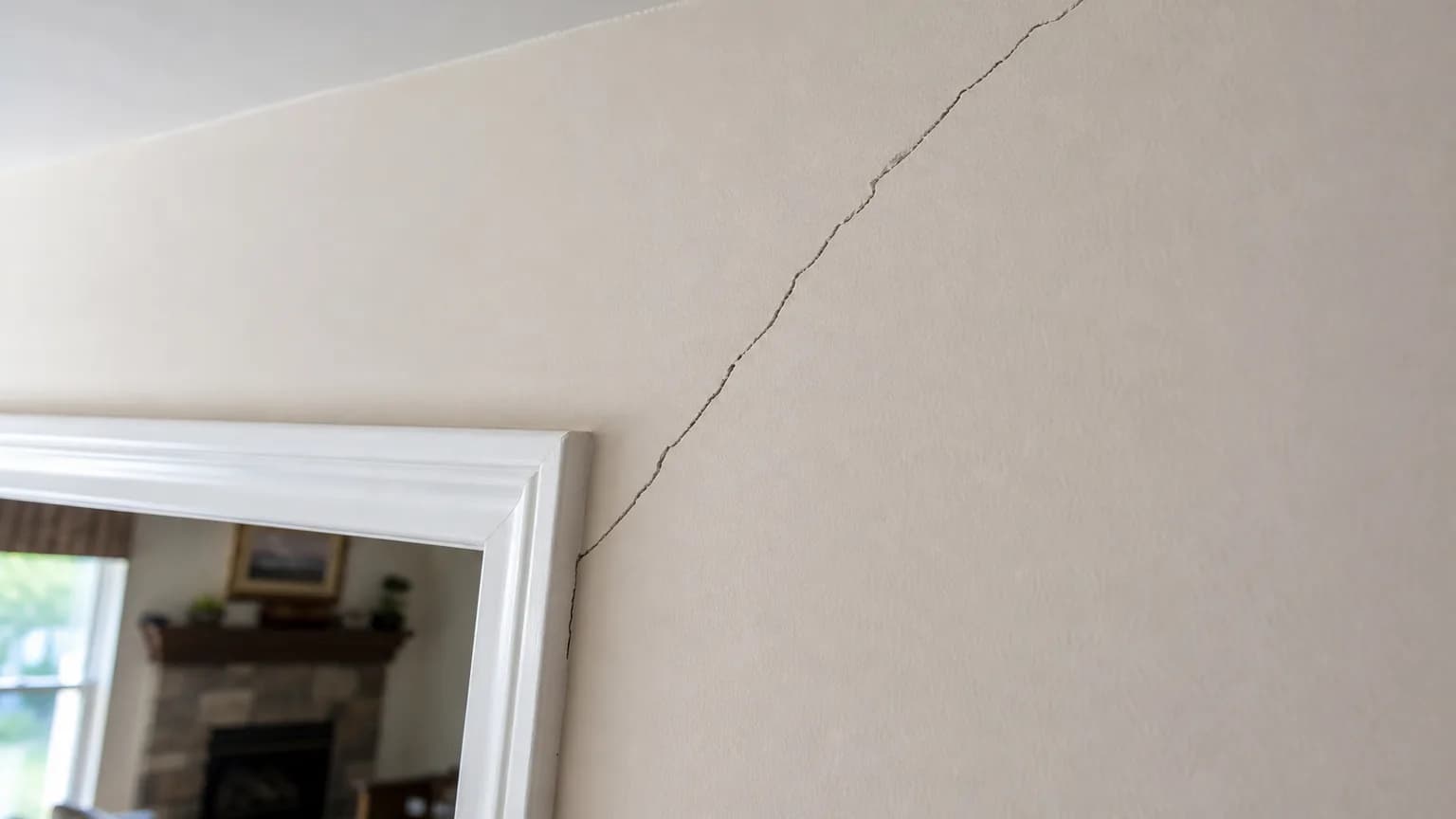
Quick answer
Most wall cracks in Chester County homes are cosmetic, caused by normal seasonal humidity swings, minor settling, or aging joint tape, and can be patched and painted over. Cracks wider than a pencil's width, ones that grow quickly, or ones near doors and windows paired with sticking or new gaps deserve a closer look before you cover them up.
If you've noticed a new line running across a wall or ceiling, you're probably looking for straightforward drywall crack repair in Chester County, PA advice, not a sales pitch. The good news is that most cracks are ordinary and easy to fix. This guide walks through what separates a simple patch from a crack worth a second look, using the same signs a contractor checks before ever picking up a taping knife.
What Kind of Wall Crack Are You Looking At?
Before deciding whether to patch a crack yourself or call in help, it helps to know what you're looking at. Not every crack behaves the same way, and the pattern usually tells you more than the length does.
- Hairline cracks — thin, straight lines usually at the seam between two sheets of drywall, or where tape has lifted slightly over time.
- Corner cracks — short cracks at the corner of a doorway, window, or ceiling line, often from wood framing shrinking and expanding with the seasons.
- Nail or screw pops — small round bumps or cracks where a fastener has worked loose from the framing behind the wall.
- Diagonal cracks at door or window corners — angled cracks that run up and away from a top corner of a frame.
- Horizontal cracks — cracks that run sideways across a wall, most notable in a basement or lower level.
- Stair-step cracks — a zigzag pattern that follows masonry joints, more common on foundation or block walls than interior drywall.
The first four are the ones we see most often in Chester County living rooms, hallways, and bedrooms, and they're almost always a straightforward drywall crack repair. Horizontal and stair-step cracks are less common on interior walls and are the ones worth a closer look, covered in the next section.
Signs Your Wall Crack Is Normal
Most of what shows up on interior walls falls into the ordinary category. Homes move a little every year as wood framing absorbs and releases moisture with the seasons, and joint compound isn't as flexible as the wood and drywall around it. A crack is usually nothing to worry about when:
- It's thinner than about 1/16 to 1/8 inch — roughly the thickness of a dime's edge.
- It runs along a seam, in a straight line, or at a single door or window corner.
- It hasn't grown, widened, or spread to a new spot over the last several months.
- Doors and windows nearby still open, close, and latch normally.
- It showed up gradually rather than overnight after a specific event.
If your crack checks those boxes, a standard repair — mesh tape, a few coats of joint compound, a light sanding, and matching texture — is typically all it needs.
Signs That Are Worth a Second Look
A smaller share of cracks point to something happening behind the wall rather than ordinary surface wear. Consider getting a professional opinion — not necessarily a full repair — before patching over it if:
- The crack is wider than about 1/4 inch, or you can see daylight or insulation through it.
- It runs horizontally across a basement or foundation wall.
- It follows a stair-step pattern along block or masonry joints.
- It appeared suddenly rather than developing slowly.
- It's paired with doors or windows that stick, floors that feel uneven, or new gaps opening between trim and walls.
- The same spot keeps cracking again shortly after being repaired.
None of these signs means a home is in immediate danger, and most turn out to be manageable. But they're worth mentioning to a contractor before the wall is patched and painted, since covering a crack makes the underlying cause harder to see later. If a leak is the likely cause, our water-damage repair guide covers what that process looks like.
A simple way to track a questionable crack: mark each end with a pencil dot and the date, or take a photo next to a tape measure every couple of weeks. If the mark hasn't moved after three or four weeks, that's a good sign it's settled and ready for a standard repair. If it has grown, that's useful information to bring to a professional rather than something to guess about.
Drywall Crack Repair in Chester County, PA: What the Process Actually Looks Like
Once a crack is confirmed to be a normal one, the repair itself follows a fairly standard sequence:
- Open and clean the crack — loose or crumbling compound is scraped away so tape and mud have solid material to bond to.
- Bridge it with tape — paper or self-adhesive mesh tape spans the crack so it can't simply telegraph back through fresh compound.
- Build the finish in coats — joint compound goes on in two or three thin coats, feathered wider each time so the repair blends into the surrounding wall instead of standing proud.
- Sand and match texture — once dry, the patch is sanded smooth, and if the wall has orange peel, knockdown, or another pattern, that texture is matched so the repair doesn't read as a patch.
- Prime and paint — a stain-blocking primer over the repair keeps old marks from bleeding through the new paint.
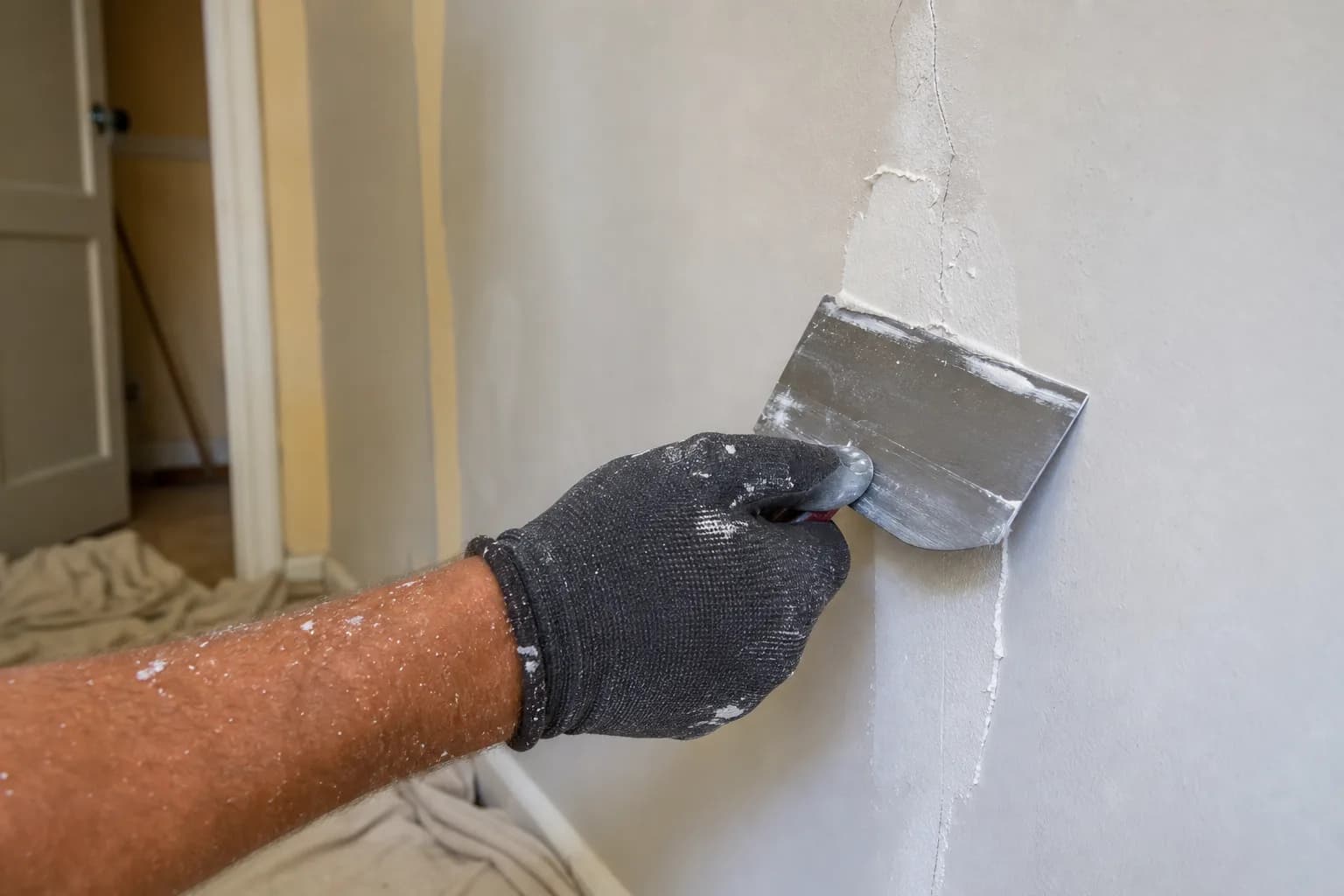
One local wrinkle: Chester County's humid summer stretches and its dry winter heating season both affect how long each coat needs to dry. High humidity can roughly double drying time compared with a mild, dry day, so a repair started during a muggy week may need extra patience. Running a fan or a dehumidifier in the room helps the compound cure evenly before the next coat goes on, and rushing paint onto a still-damp patch is one of the more common reasons a repair fails early.
Plaster Cracks in Older Main Line and Chester County Homes
Many homes around Wayne, Malvern, West Chester, and the older sections of the Main Line were built with plaster over wood lath instead of drywall. Plaster behaves differently — it's harder, more brittle, and often has decades of prior patches layered underneath it. A hairline plaster crack usually gets the same normal-versus-worth-a-look evaluation as a drywall crack: age and seasonal movement, not necessarily a structural issue.
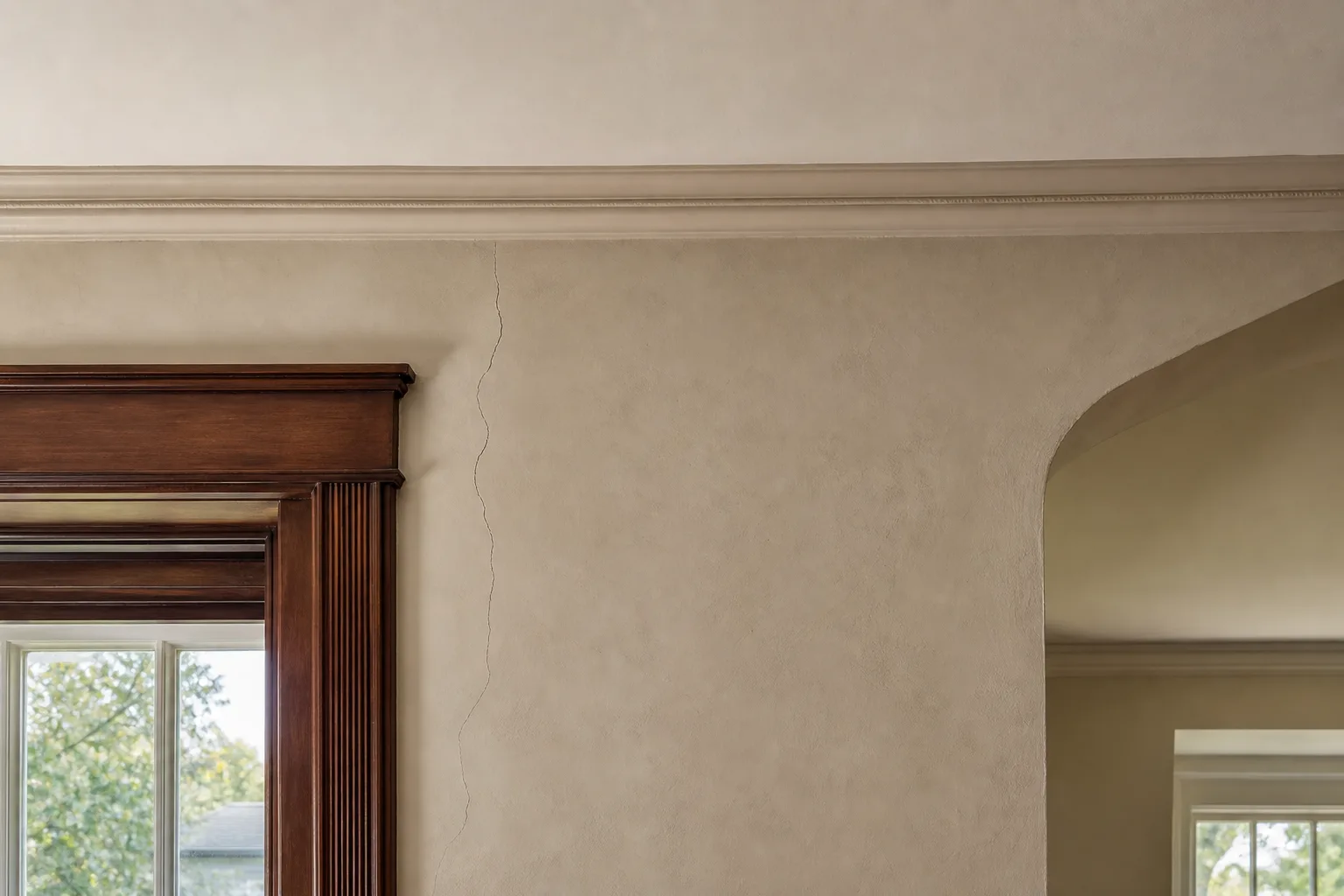
The repair approach can differ, though. A loose or bulging section of plaster sometimes needs to be secured or removed rather than simply taped over, and the replacement material has to be feathered carefully so it doesn't leave a visible ridge next to decades-old plaster. Homeowners maintaining an older Main Line home often get a longer-lasting result from a plaster-specific repair than from a quick drywall patch dropped into an old lath wall.
One way to tell which material you have: knock lightly on the wall. Plaster generally feels harder and sounds more solid, while drywall has a slightly hollow, papery knock. Homes built before roughly the 1950s are more likely to have plaster; most construction from the 1960s onward switched to drywall, though additions and renovated rooms in an older house may mix both.
When to Patch It Yourself vs. Call a Professional
A small hairline crack in a spot you can reach safely is a reasonable weekend project if you're comfortable with basic taping and sanding. Consider bringing in a professional when:
- The crack is on a vaulted ceiling, stairwell, or another hard-to-reach spot — see our ceiling repair guide for ceiling-specific cracks.
- You want the texture matched so the patch is invisible, not just filled.
- The crack matches one of the "worth a second look" signs above.
- It's in a high-visibility room where an uneven patch would stand out.
- You'd rather have a second set of eyes on the cause before it's covered.
A professional walk-through is also useful simply for peace of mind. Seeing dozens of wall cracks a year gives a contractor a quick sense of whether a pattern is typical for the home's age and construction, which can save a homeowner from either over-worrying about a harmless line or under-reacting to one that deserves attention.
If you'd like an outside opinion, Main Line Drywall offers free written estimates for both quick patch jobs and larger repair scopes across Chester County and the Main Line, so you can decide with a clear picture of the work before anything is scheduled. You can also call to talk through what you're seeing at (484) 202-0548.
Frequently asked questions
- Is a crack in drywall always a sign of a foundation problem?
- No. Most drywall cracks come from normal seasonal wood movement, minor settling, or aging tape — not a foundation issue. Foundation-related cracks are more often horizontal, follow a stair-step masonry pattern, or show up alongside sticking doors, uneven floors, or sudden gaps at trim.
- How wide does a crack need to be before I should worry?
- As a general guideline, cracks thinner than about 1/8 inch are usually cosmetic. Cracks wider than roughly 1/4 inch, especially if you can see daylight or insulation through them, are worth having looked at before they're patched over.
- Can I paint over a hairline crack without repairing it first?
- Paint alone won't hold a crack closed for long. Tape and joint compound bridge the crack so it doesn't reopen; skipping that step usually means the line reappears through fresh paint within a season or two.
- Do plaster cracks in older Main Line homes get repaired the same way as drywall cracks?
- The evaluation is similar, but the materials differ. Plaster is harder and more brittle than drywall, and loose sections sometimes need to be secured or removed rather than taped over, so older homes often benefit from a plaster-specific repair approach.
- How long does a typical crack repair take to dry before I can paint?
- A basic two-to-three-coat repair often needs a day or more between coats to dry fully, and humid stretches can roughly double that time. Rushing paint onto a still-damp patch is one of the more common reasons a repair fails early.
Get a Straightforward Answer, No Pressure
Most wall cracks are nothing more than a normal part of owning a home in Chester County. When you'd rather have a second opinion before patching, Main Line Drywall gives straightforward, written estimates for homeowners across Exton, West Chester, Malvern, Wayne, and the surrounding Main Line.