
Repair Guides
Drywall Hole Repair in Chester County, PA: Choosing the Right Patch
Quick answer
Fill a small, shallow hole in sound drywall; reinforce an opening that goes through the board; use a secured drywall insert for a larger or irregular opening. If the board is wet, soft, or loose, address the cause and remove unsound material first. Tape and feather the repair, then prime before painting. The hole's size is only one part of the decision.
A moved towel bar, a doorknob strike, and a plumber's access opening all leave holes, but they do not call for the same repair. For drywall hole repair in Chester County, PA, the useful question is whether sound wallboard remains around the opening and whether the patch will have solid support. Tiny holes can often be filled; an opening through the board needs reinforcement or a fitted piece of drywall. The final coats matter just as much as the patch underneath.
Before You Patch: Check the Wall Behind the Hole
Look at the edges before reaching for compound. A clean opening in dry, firm board from a doorknob or a removed fixture is different from a hole with crumbling paper, damp insulation, or repeated cracking. Press gently around the damage: if the surrounding surface gives way, simply bridging the visible gap will leave the weak area in place. Check for the source of any moisture and repair it before closing the wall.
Know what might be in the cavity. Plumbing, wiring, and a nearby outlet change how a cut can be made safely. If the opening followed a leak, our water-damage repair overview explains why drying and assessing affected material come before the finish. If an old wall is plaster over lath rather than paper-faced drywall, use a plaster-specific approach instead of assuming a standard patch kit will fit.
For a painted surface in a pre-1978 home, disturbing old paint can create lead dust. The EPA's Renovation, Repair and Painting guidance explains the rules for paid renovation work and lead-safe practices. Do not cut or sand suspect paint before deciding how to manage that risk; a homeowner working on their own home should still use lead-safe precautions.
Drywall Hole Repair in Chester County, PA: Match the Patch to the Opening
Think in terms of what holds the repair in place, not a magic hole diameter. Wall thickness, nearby framing, the condition of the paper facing, and the likelihood of another impact all affect the choice. These are practical categories rather than fixed size rules:
- Small nail or screw holes in firm board: clean away loose paper and fill the recess with suitable patching compound. A deep divot may need another thin pass after the first application sets or dries. Sand lightly once ready, then prime.
- A small opening through the board: a suitable reinforced repair patch can span the opening if the surrounding drywall is sound. Keep the patch flat, bury its edge in thin coats, and feather wider than the opening. A rigid backing or insert may be preferable in a spot likely to be hit again.
- A larger, jagged, or access-panel-sized opening: cut back to sound edges and fit a matching-thickness drywall piece. Secure it to framing or properly installed backing before taping the seams; compound by itself should not be asked to hold a loose panel in place.
If a section has deteriorated beyond a clean opening, compare a limited cut-out with a wider replacement rather than patching repeatedly. Our repair-versus-replacement guide covers that larger decision; this guide stays with the mechanics of a localized hole.
Why Backing and Joint Tape Matter for a Larger Hole
For a drywall insert, the new piece should sit securely in the same plane as the surrounding wall. Backing strips behind the opening or existing studs give the fasteners something solid to grip. A patch that rocks when pressed will crack through the finish later. Use a compatible board thickness and check that fastener heads are set without tearing the face paper.
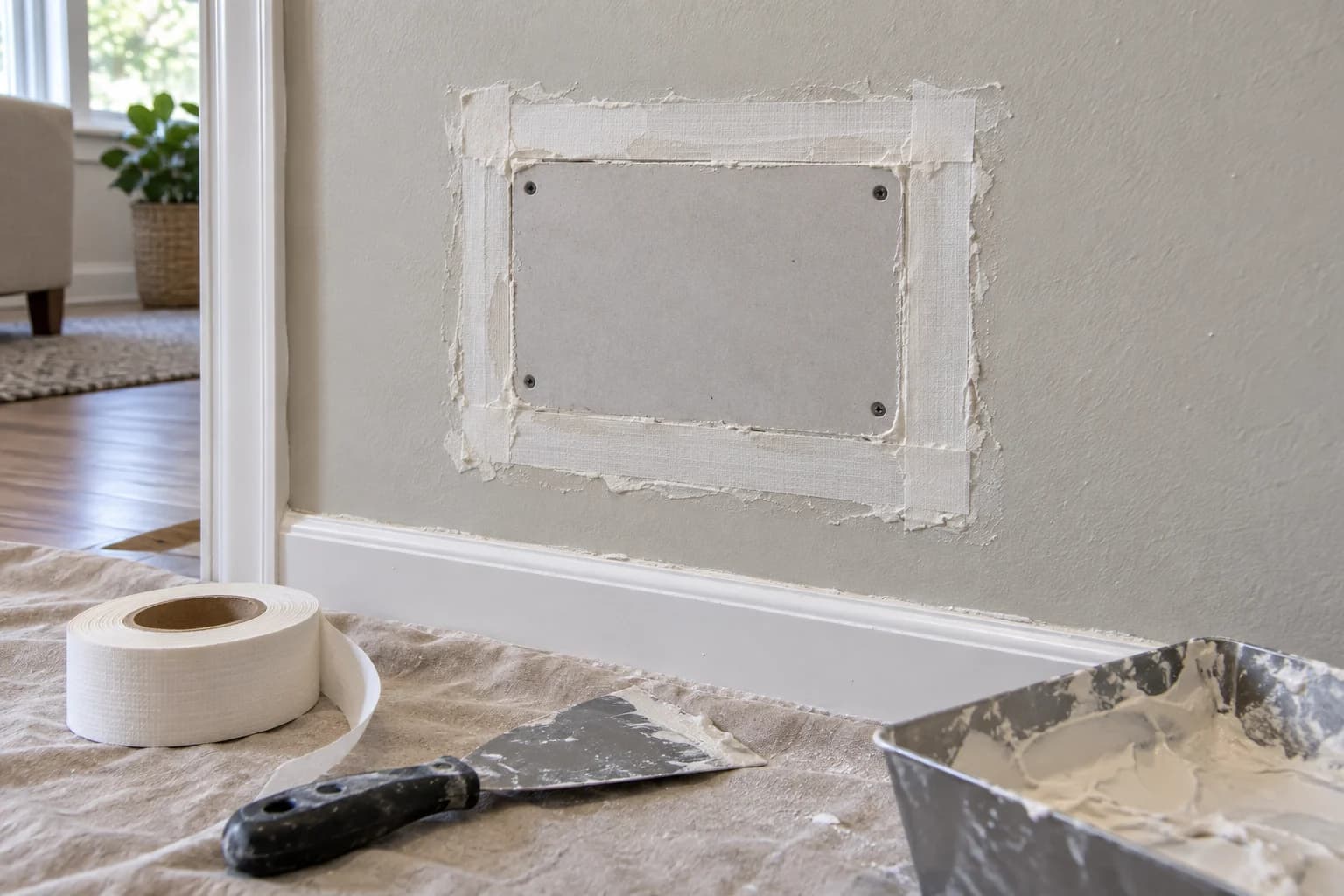
Joint tape helps tie the insert to the existing wall. Paper tape is embedded in a compatible wet taping compound; a mesh product has its own compound requirements. The Sheetrock installation and finishing guide describes patching openings and applying successive coats after the previous coat is ready. Follow the specific materials' instructions rather than combining tape and compound at random.
A patch over a frequently struck wall area may deserve a more durable repair and a doorstop, not just another skim of compound. A former plumbing opening should not be closed until the underlying work has been checked and any required access has been addressed.
How to Finish a Drywall Patch Without a Raised Square
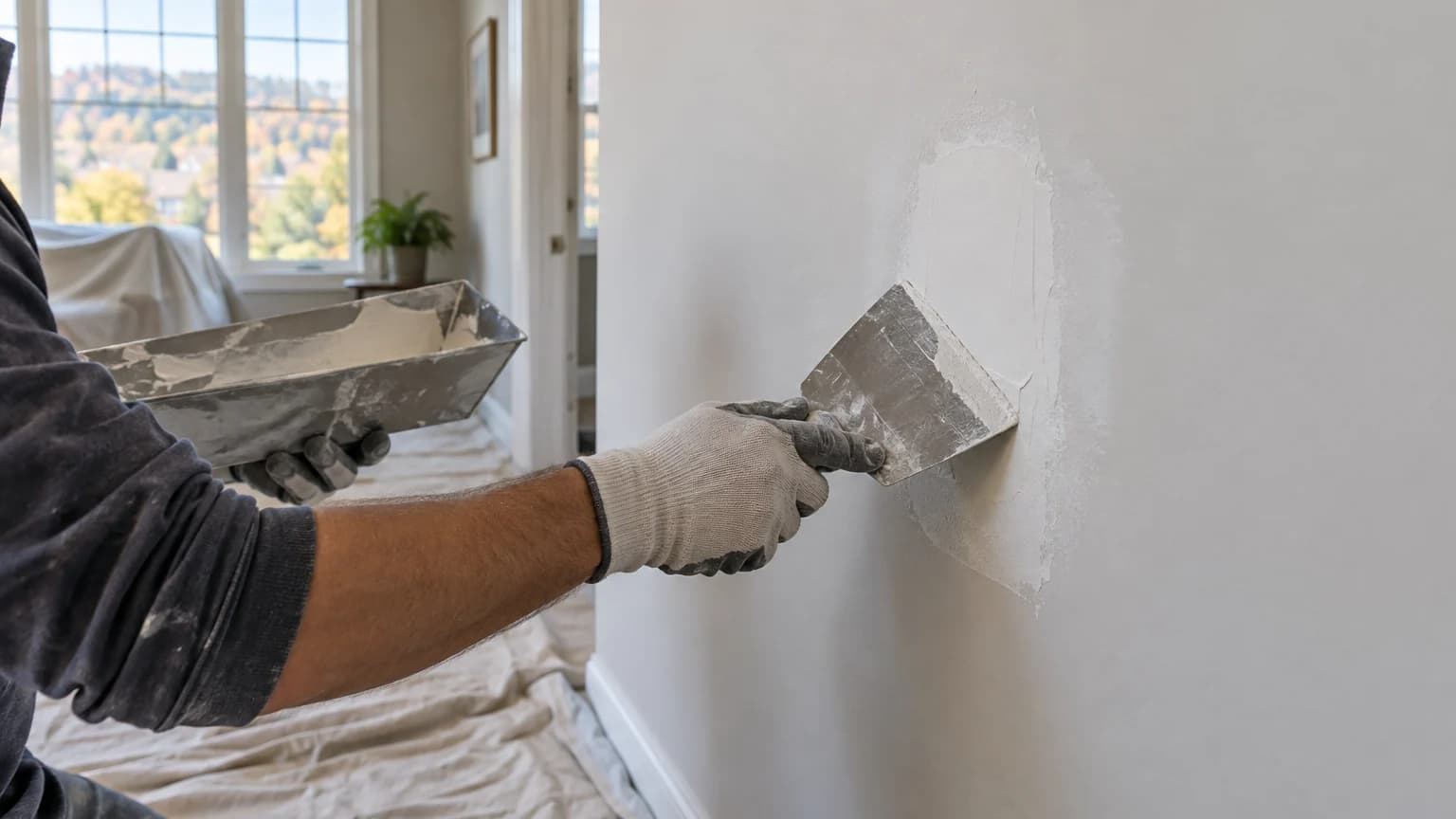
The visible part of a good patch extends beyond the hole. Start with a sound, taped seam, then apply thin coats that widen toward the surrounding wall. Let each coat reach the manufacturer's required drying or setting stage before the next step. Rushing fresh compound under another coat can lead to shrinkage, rough sanding, or visible edges. Scrape off ridges between coats rather than building a thick hump to hide them.
Check the repair from the side under the room's normal light. A flat patch can still show if its edge is abrupt, the existing wall has a texture, or the surrounding paint has a different sheen. Light sanding should smooth the finish without exposing the tape or tearing the wall paper. Remove dust, use an appropriate primer on the repaired area, then assess the color and sheen of the topcoat. Spot painting may remain visible on an older wall; painting a larger wall section can help it read evenly.
If the wall has orange peel, knockdown, or another patterned finish, allow for texture matching after the surface is sound and before final paint. A texture product cannot hide a proud insert or a loose seam. Our separate texture-matching guide explains why even a neatly filled patch may still show in side light.
When a Hole Is a Reason to Get a Repair Assessment
A dry fastener hole in a low-visibility spot is a manageable home project. For a wide opening, recurring impact damage, a repair next to trim, or a highly visible wall, getting a written scope can save trial-and-error finish work. The scope should describe what is being removed, what supports the replacement piece, how the seam and existing texture will be treated, and whether priming and painting are included.
Do not treat a damp hole as a purely cosmetic repair. Likewise, an opening near electrical work, a fire-rated assembly, or an older painted surface can have requirements beyond a basic wall patch. Ask the appropriate trade or a qualified contractor to assess those conditions before closing them up. Main Line Drywall's drywall repair service covers localized holes and larger cut-outs across the Chester County and Main Line area; a look at the actual wall is the way to settle the repair scope.
Frequently asked questions
- Can I fill a doorknob hole with joint compound alone?
- If the impact has broken through the drywall, compound alone may crack or fall into the cavity. A suitable reinforced patch or a secured drywall insert gives the repair support; the method depends on the opening and whether it is likely to be hit again.
- Why can I still see my patch after painting?
- A raised compound edge, unmatched texture, unprimed compound, or a paint color and sheen difference can all outline the repair. Check it under side light before paint and feather the coats into the existing wall.
- Should I patch a wall while it is still damp?
- No. Find and correct the moisture source, then assess and dry the affected area. Soft or deteriorated drywall may need to be removed rather than covered with compound.
- Does a drywall insert need tape on its seams?
- Usually yes. A secured piece of drywall still has joints where it meets the existing wall. Compatible joint tape and compound reinforce those joints before finish coats, primer, and paint.
Get the Right Patch, Not Just a Covered Hole
If the opening is wider than a simple fill or you want the finish to blend with the rest of the wall, request a written drywall repair estimate. Share a photo and describe what caused the hole so the proposed scope starts with the right repair method.