
Repair Guides
Water-Damage Drywall Repair in Chester County, PA: What's Salvageable and What Isn't
Quick answer
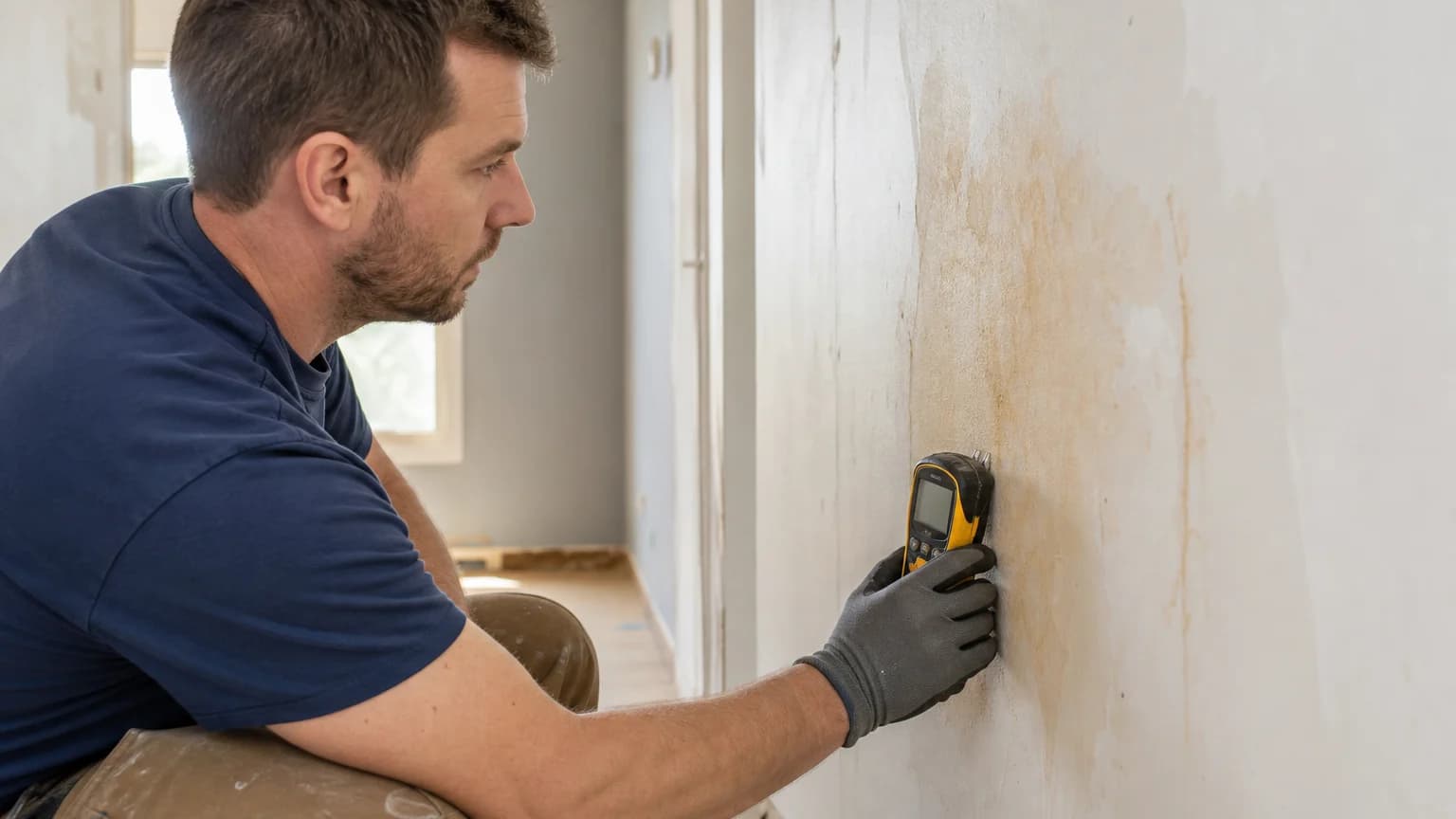
Drywall that got briefly damp from clean water and dried within 24 to 48 hours can sometimes be dried in place and repainted. Drywall that stayed wet longer, was exposed to contaminated water, or shows sagging, bubbling, or a musty smell usually needs to be cut out, along with any wet insulation behind it, before the repair can start. The length of time the material stayed wet matters more than how the water got there.
A leaking supply line, an overflowed washing machine, or water that backed up during a storm all leave the same question behind: how much of the wall actually has to come out? Water-damage drywall repair in Chester County, PA isn't an automatic full-wall replacement, but it isn't a simple wipe-and-dry fix either. The deciding factors are how long the drywall stayed wet, what kind of water it was, and whether the insulation and framing behind it got wet too. Getting that assessment right the first time is what keeps a repair from turning into a mold problem a few months later.
The First 24 to 48 Hours Decide a Lot
Gypsum board is porous. It absorbs water quickly, and that same property makes it a poor candidate for drying out once it has been saturated for more than a day or two. The first question after any leak or flooding is simple: how long was the drywall actually wet, and has it had airflow since?
- Water that's caught and dried within about 24 to 48 hours, with fans or good airflow moving through the space, has a real chance of drying without replacement.
- Drywall that sat wet for several days, or that was never actively dried, usually needs to come out even if it looks fine on the surface, since the paper facing and gypsum core can stay weakened and prone to mold growth.
- A section that feels soft, swollen, or spongy when pressed has already lost structural integrity and should be replaced regardless of how long it's been wet.
If the water is still actively coming from somewhere — a supply line, a roof leak, or a sump pump that isn't keeping up — stop and address that source first. Drying or patching a wall while water keeps arriving behind it just delays the same repair.
Does the Type of Water Change the Repair?
Yes, and it's often more important than the volume of water involved. Restoration professionals generally sort water into three rough categories: clean water from a supply line or appliance, gray water from something like a washing machine discharge or a toilet overflow without waste, and contaminated water from sewage backup or flooding that picked up contaminants outside the home.
Drywall and insulation exposed to gray or contaminated water are typically removed rather than dried in place, regardless of how long they were wet, because the material itself can retain contamination even after it looks and feels dry. Clean-water exposure gives you more room to judge based on time and condition rather than an automatic removal.
Our water-damage repair service covers both situations, but the assessment step above is what actually determines whether a crew is drying and patching a small section or opening up a larger area of wall.
Check What's Behind the Drywall, Not Just the Surface
A water-damaged wall is rarely just a drywall problem. Standard fiberglass batt insulation holds water and loses most of its insulating value once saturated, and it dries far more slowly than the drywall in front of it. If insulation behind a water-damaged section is wet, it almost always needs to be removed and replaced, even if the drywall itself seems salvageable.
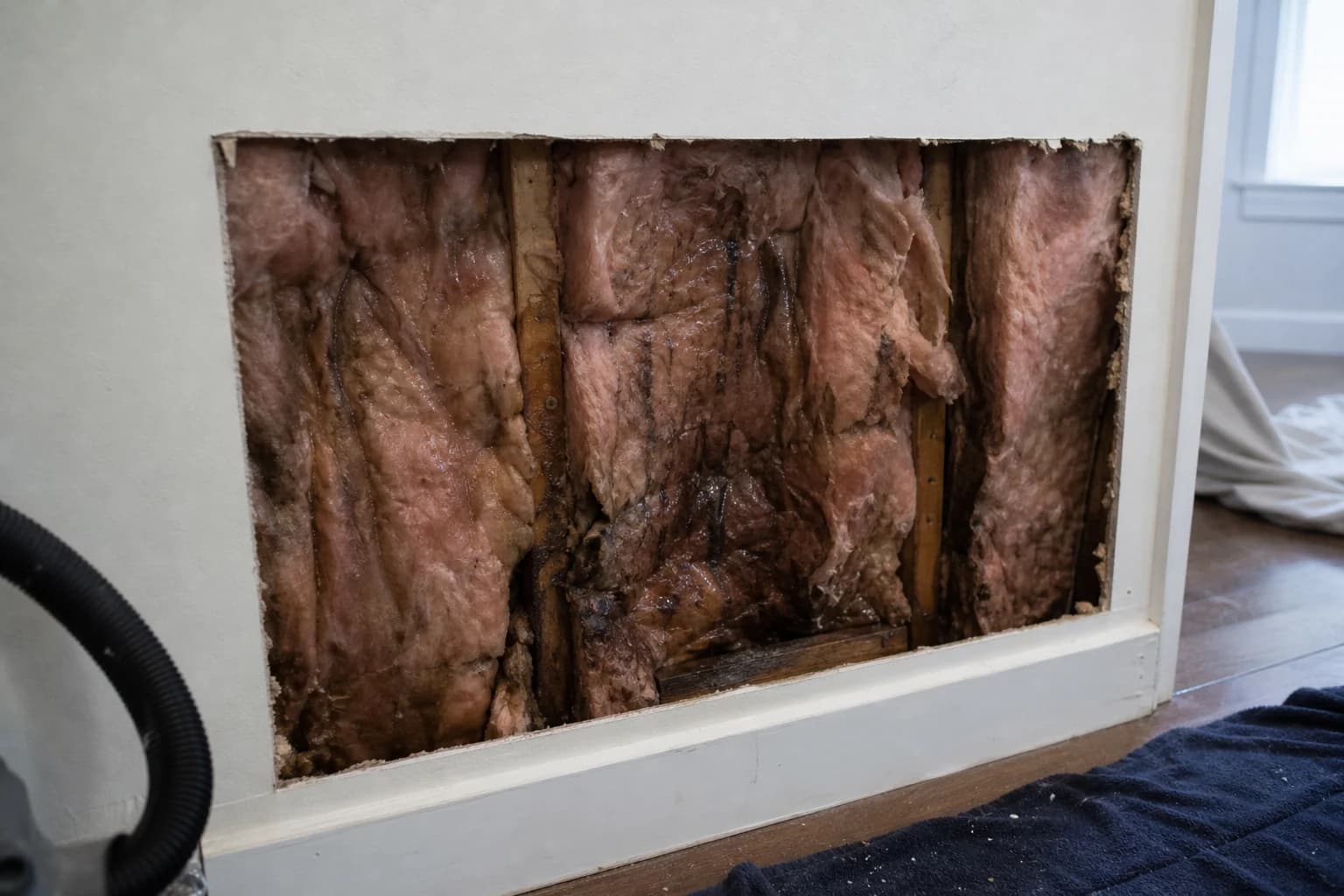
Wood framing behind the wall should also be checked for softness or discoloration before any new drywall goes back up. Enclosing a wall over damp framing or insulation is one of the more common ways a hidden mold problem gets started, since the new drywall hides the issue rather than resolving it.
When Mold Becomes the Bigger Concern
Mold can begin growing on wet drywall and the paper facing behind it within roughly 24 to 48 hours in the right conditions, according to the EPA's guidance on mold and moisture control. That window is part of why drying time matters more than how the water arrived. A musty smell, visible dark spots, or discoloration spreading beyond the original wet area are all signs that mold may already be present, even if the surface paint still looks intact.
If you suspect mold growth, especially over a large area or in a space with poor ventilation, the EPA recommends addressing the moisture source and assessing the extent of the problem before simply painting or patching over it. A water-damage drywall repair that skips this step risks sealing a mold problem behind fresh drywall instead of resolving it.
What the Repair Itself Involves
Once the water source is fixed and the extent of the damage is confirmed, the repair generally follows this sequence:
- Remove drywall and insulation back to dry, sound material, cutting along a clean line rather than trying to preserve a damaged edge.
- Allow framing to dry fully, confirming with a moisture meter rather than guessing by feel alone, before closing the wall back up.
- Replace any wet insulation, choosing a moisture-resistant option if the location is prone to future exposure, such as a basement wall.
- Hang new drywall sized to the opening, then tape and finish the seams in multiple thin coats.
- Match the surrounding texture and prime with a stain-blocking primer if any discoloration remains visible, then paint the full affected panel rather than just the patch.
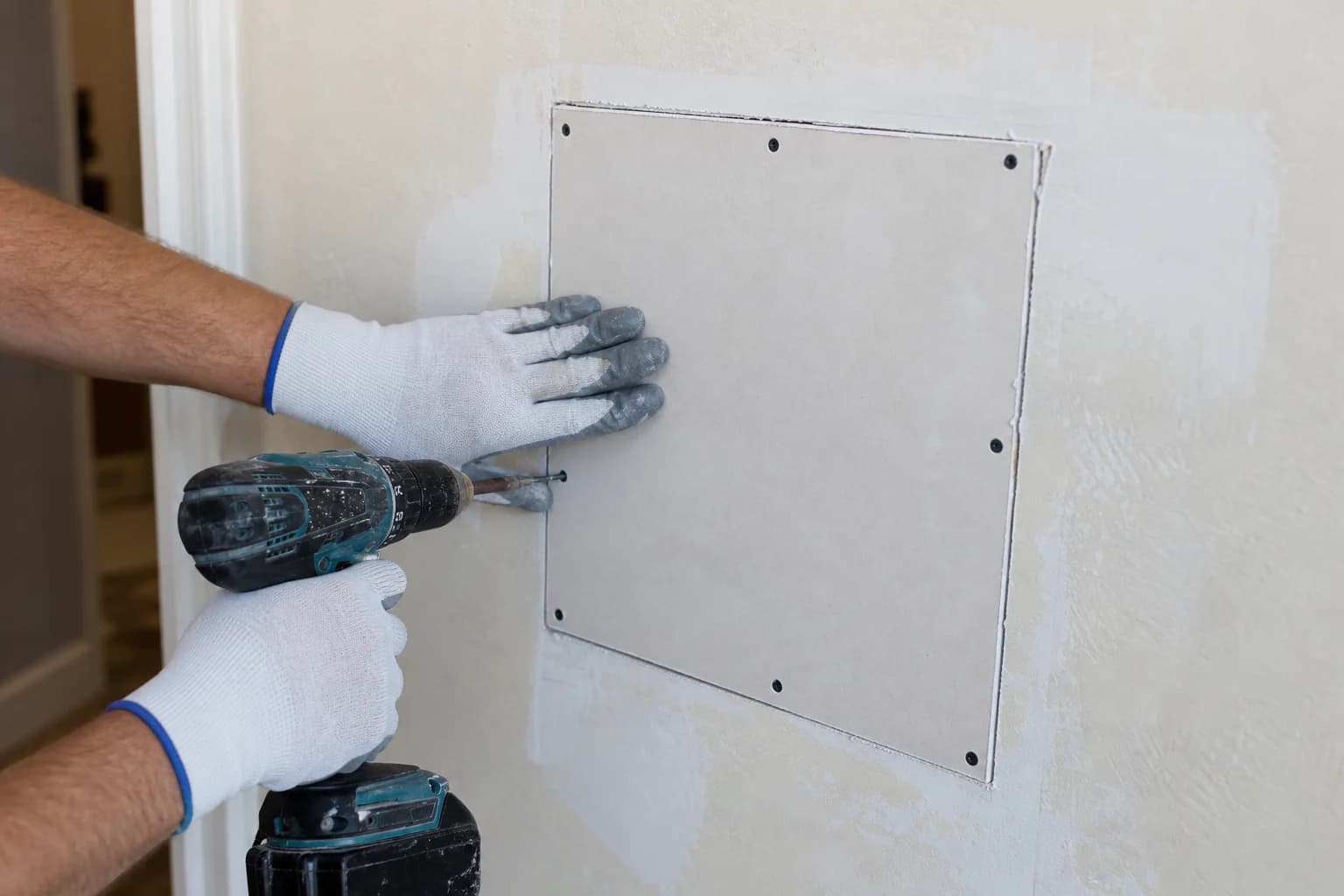
A below-grade wall, like one in a basement that's being finished, carries extra risk of repeat water exposure, so resolving the moisture source and considering moisture-resistant materials matters even more there than in an above-grade room.
What You Can Check Yourself vs. When to Call a Professional
A small, clean-water spot that's caught early and dried with fans within a day or two is a reasonable thing for a homeowner to monitor and handle. Bring in a professional when any of the following apply:
- The water came from anything other than a clean source, such as a toilet overflow or outside flooding.
- The drywall has been wet for more than a day or two, or you're not sure how long it was wet.
- You notice a musty smell, visible mold, or discoloration spreading beyond the original wet area.
- The drywall feels soft, swollen, or spongy anywhere when pressed.
- Insulation or framing behind the wall is wet, or you can't tell without opening it up.
This is also where location matters a little. Older homes around West Chester and Malvern more often have plaster walls rather than drywall, and a wet plaster wall behaves differently than wet drywall — see our plaster repair guide if that's what you're dealing with instead.
If you're not sure which category your situation falls into, Main Line Drywall offers free written estimates for water-damage drywall repair across Chester County and the Main Line, or you can call (484) 202-0548 to describe what you're seeing before scheduling a look.
Frequently asked questions
- Can water-damaged drywall dry out without being replaced?
- Sometimes, if the water was clean, the drywall stayed wet for less than about 24 to 48 hours, and it had good airflow to dry. Drywall that was wet longer, exposed to contaminated water, or feels soft or swollen should be replaced rather than dried in place.
- How long does it take for mold to grow on wet drywall?
- The EPA notes mold can begin growing within roughly 24 to 48 hours under the right conditions. That short window is why how long drywall stayed wet matters more than the size of the leak when deciding whether a repair or full replacement is needed.
- Does the insulation behind a water-damaged wall need to be replaced too?
- If it got wet, usually yes. Standard fiberglass insulation holds moisture and dries much more slowly than drywall, and leaving wet insulation in place behind new drywall is a common way hidden mold problems start.
- Is water-damage drywall repair different for a basement wall?
- The repair steps are similar, but basement walls carry a higher risk of repeat moisture exposure. Resolving the water source and considering moisture-resistant materials matters more there than in an above-grade room.
- What type of water makes the biggest difference in the repair?
- Clean water from a supply line gives more room to judge based on drying time. Gray or contaminated water, such as from a toilet overflow or outside flooding, typically means the affected drywall and insulation should be removed rather than dried in place, regardless of how quickly it's caught.
Get a Clear Assessment Before You Repair or Replace
If you're dealing with a leak or flooding and aren't sure how much of the wall needs to come out, Main Line Drywall can assess the damage and provide a free written estimate for the repair. The sooner the extent of the damage is confirmed, the less likely it is to turn into a bigger problem later.